• Welcome to AppraisersForum.com, the premier online  community for the discussion of real estate appraisal. Register a free account to be able to post and unlock additional forums and features.

External obsolescence prove it exists

Status
Not open for further replies.
Actually purchased a DW in the area with the EO and moved the unit to the lake, an area without the external influence. Paid $37,500 for the house and land. Moved the house and was left with a lot with well and septic worth $20k (land values are basically unaffected unless in some of the subdivisions with the most foreclosures etc). Ended up with under $80k in the DW at the lake, now worth $155 or so, was worth about $135k at the time of the move. You gotta know your market.:)
 
Bill G.

I'll give it a guess. You had appraisal training from NAIFA? Most appraisers I've encountered that believe an over-improvement due to size is FO were trained by NAIFA.

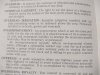
So you made me go back to the "bestest" Real Estate Appraisal Terminology Book ever published. The joint effort by the SREA and AIREA, now AI, by Bryl N. Boyce, PHD, SRPA.

I've enclosed a snap shot from the book. Note that it is called environmental obsolesceence back then. If you flip to the definition of environmental obsolescence in the book, it says that it's synonymous with Economic or Locational Obsolescence.
 

Attachments

  • MVC-001S.JPG
    MVC-001S.JPG
    56.4 KB · Views: 26
Last edited:
Ben,

SREA days bring back some lost info.....but hasn't the book changed ? if not, does that mean we can consider writings of the 20' & 30's to also be gospel ?

to converse with one another hear is as close to a North/South train on the same track...exciting, but filled with reems of history

don't everybody git their panties all twisted, eye felt it was tyme to launch some smart *** remarks into the thrillegee


cheers
 
Jay,

BTW, if you read the definition I posted, you will notice that as stated in the definition, the EO on my home went away when similar-sized homes were built in the neighborhood. Nice, huh?
 
Prove it exists.
Of course, EO doesn’t “exist.” By definition, it’s hypothetical. It is the difference between subject’s as-is value and what subject would be worth (hypothetically) if subject were not affected by some negative influence.

I would argue that land can economically depreciate
I often wonder what is the source of a lot of the homilies the appraisal profession passes off as a body of knowledge. Wouldn’t it be funny if that one about land not depreciating started out because one appraisal author confused the elements of market value with what the IRS allows as tax deductions? :)

-By definition, (The Appraisal of Real Estate, 9th, page 395), line 1 under External Obsolescence, "External obsolescence, the diminished utility of a STRUCTURE due to negative influences from OUTSIDE the site, ..."
The idea that only parts of properties are affected by its surroundings is bonkers.


So, supposed bad design (overbuilding) is either FO or EO. Negative external factors either affect part of the property or the whole property. What do you expect? Anything rooted in the cost approach, can only bear inedible fruit. :)
 
Land and the term 'depreciate' are a often a semantics problem, IMO. I would argue that land can economically depreciate.
I agree with you Joyce and some authors dispute that land does not 'depreciate' and the old concept of 'environmental' obsolescence is not a concept that i reject entirely. IMHO, an external defect like a junkyard next door devalues a property which can be cured by removing the junk yard. And that devaluation can be called "obsolescence" or 'reduced value" or whatever, it all comes out the same...it comes off the TOTAL property value.
 
So based on the statements I've read you can buy two lots one on a railroad track the other a quarter mile away in the same subdivision. Now you want to make the same profit on each house your going to build and each are identical in every way. One has what you say is EO when it's built or do you pay less for the lot or do you pay te same in order to preserve the concept of EO to the improvements.

Tell me where that is incorrect.
 
I agree with you Joyce and some authors dispute that land does not 'depreciate' and the old concept of 'environmental' obsolescence is not a concept that i reject entirely. IMHO, an external defect like a junkyard next door devalues a property which can be cured by removing the junk yard. And that devaluation can be called "obsolescence" or 'reduced value" or whatever, it all comes out the same...it comes off the TOTAL property value.


On the surface what you say is correct but you need to clearer on is, that depreciation is the opposite of appreciation. That is why I prefer the term decline in value it is much easier for the layman to understand even appraisers misunderstand the relationship between appreciation and depreciation as I recall ( may not be correct) these are accounting terms.
 
Nice discussion :)

First off, I think that the most of the examples given only work with a consistent HBU.

Jim has a great point about the vacant sites being affected by whatever the source of EO is, RR tracks, dump, etc. Certainly the market would recognize a difference in a site next to a RR track and a site several blocks away. Does it matter what you call it? It can be EO attributable to the land or a locational characteristic, the affect will be the same.

Based on the definition of EO given in the The Appraisal of Real Estate, once the site is improved, the diminished utility transfers from the land to the improvements. That appears to me to be an example of a "method" for dealing with a problem. It may not be right, but at least it's consistent.

Like Terrell said, the affect on the overall property value should be the same, regardless of how you recognize it.
 
Status
Not open for further replies.
Find a Real Estate Appraiser - Enter Zip Code

Copyright © 2000-, AppraisersForum.com, All Rights Reserved
AppraisersForum.com is proudly hosted by the folks at
AppraiserSites.com
Back
Top