• Welcome to AppraisersForum.com, the premier online  community for the discussion of real estate appraisal. Register a free account to be able to post and unlock additional forums and features.

Give me a break

Status
Not open for further replies.
Yea. That true. A couple of days ago I put up on a forum that I was just finishing an appraisal for Montara and was surprised that almost all of my comps were within 1%. I went back to do more work on it and saw that the MLS I had actually stuck in one that was simply an average and also one of the comps actually had an ocean view. Those damned ocean views!!!. You know, they are not all the same, and the MLS only says "TRUE" or "FALSE". I have 220+ comps and there is no way I could go through everything and check and rate the ocean view. Although, I think in terms of whether there is at least a "peak ocean view" 90%+ are correct. I had to go over everything again.

I spend a hell of a lot of time on this for $700. But for me, being retired, well I like doing it.

Anyway, going over everything very carefully, so that the models do make sense. No weird stuff except there is a 2-way interaction between baths and sale age (COE age) that I really can't get rid of, it is very persistent.

This is what the deviations of the comps from the average come in at - and I was shocked:

View attachment 51293

That is to say, each of these comps was adjusted within 1/5th of one percentage point of their average (the concluded value) ... And this was spit out by my computer program. Of course I had to do a lot of work getting the data correct and using MARS. And no one is going to believe you can get this close. But yes. I have one model that I consistently applied to each of these homes to get the adjusted price, and the model is not all that complicated. These are all custom built homes ages 15-80 years in a small California Coastside community.

But the point is, to do this, you really have to understand the characteristics and what make sense or doesn't

Bert: that’s a tight range for high-end properties. What was the R-squared and SEE for the entire model?
 
There are only two acceptable options for the GSEs

1) Privatize them and make it clear that there is no government guarantee of the MBS.

2) Remain under government control with all profits being swept into a fund for future losses.
The problem with the first option is that they are and always will be too big to fail. That gives them the ability to be uber-confident that they can conduct business anyway they see fit and everybody will just have to conform to them. It will remain like that until we have a functioning secondary mortgage market again with more GSE alternatives. I gave you a "like" for that second option.
 
Bert: that’s a tight range for high-end properties. What was the R-squared and SEE for the entire model?

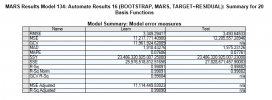
Of course, I can't say too much, as this is a real appraisal. That is, I can't give any final property values. But here are the stats

The GCV R-2 is 0.845 and the standard R2 is 0.85882, on the first stage model.
1613355907072.png


The second stage R2 for the Residuals is as you might expect 0.99882.

1613356041121.png
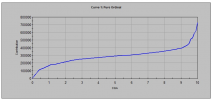
With a typical CQA curve:
1613355765586.png

When you combine the two models, then of course you are accounting for almost all variance (for this model).

Note: The model was created on house sales in Montara, CA going back to 1/1/2004.
 
The problem with the first option is that they are and always will be too big to fail. That gives them the ability to be uber-confident that they can conduct business anyway they see fit and everybody will just have to conform to them. It will remain like that until we have a functioning secondary mortgage market again with more GSE alternatives. I gave you a "like" for that second option.

Then break them up and then privatize them making it clear there is no government guarantee of the MBS.
 
Of course, I can't say too much, as this is a real appraisal. That is, I can't give any final property values. But here are the stats

The GCV R-2 is 0.845 and the standard R2 is 0.85882, on the first stage model.
View attachment 51295


The second stage R2 for the Residuals is as you might expect 0.99882.

View attachment 51296
With a typical CQA curve:
View attachment 51294

When you combine the two models, then of course you are accounting for almost all variance (for this model).

Note: The model was created on house sales in Montara, CA going back to 1/1/2004.

That is excellent you have a MAPE of about 7%.
 
Of course, I can't say too much, as this is a real appraisal. That is, I can't give any final property values. But here are the stats

The GCV R-2 is 0.845 and the standard R2 is 0.85882, on the first stage model.
View attachment 51295


The second stage R2 for the Residuals is as you might expect 0.99882.

View attachment 51296
With a typical CQA curve:
View attachment 51294

When you combine the two models, then of course you are accounting for almost all variance (for this model).

Note: The model was created on house sales in Montara, CA going back to 1/1/2004.

I thought someone would say "That's impossible, the market is not that perfect!!" Well, yes my assumption is that that the buyer of each house is PERFECT. He and only he has the authority to assign the actual market value of the home at the time he signs the contract. He is perfect. The modeling software and appraiser have to do their best to make sense of buyer grading. And, of course, the big assumption underling modeling based on data is:

1. The buyer is perfect in his judgment.
2. The data is accurate.

So, if you don't believe buyers are perfect, if you think half are idiots, that's your problem. Well, you counter: Market value requires that buyers be informed and knowledgeable, yada yada yada. How am I supposed to know that? So, I assume, a reasonable assumption, that they meet all the requirements for an arms-length transaction per the appropriate definition of market value or in other words that they are perfect graders of the value of a property at the time they agree to purchase it for such and such a value.
 
Of course, I can't say too much, as this is a real appraisal. That is, I can't give any final property values. But here are the stats

The GCV R-2 is 0.845 and the standard R2 is 0.85882, on the first stage model.
View attachment 51295


The second stage R2 for the Residuals is as you might expect 0.99882.

View attachment 51296
With a typical CQA curve:
View attachment 51294

When you combine the two models, then of course you are accounting for almost all variance (for this model).

Note: The model was created on house sales in Montara, CA going back to 1/1/2004.

Makes sense that Sale Age/Market conditions would come in first since the data goes back to 2004.
 
Makes sense that Sale Age/Market conditions would come in first since the data goes back to 2004.

Yea, small complex neighborhoods really require going back in time 10-20 years to get a sufficient variety of homes to analyze in order to create a model. But for actual comps that will go into the sales grid you only pull from the past year (if possible).
 
Yea, small complex neighborhoods really require going back in time 10-20 years to get a sufficient variety of homes to analyze in order to create a model. But for actual comps that will go into the sales grid you only pull from the past year (if possible).

I'm pretty sure the model picked up some significant splines, especially during the 2005 to 2008 range.
 
DW has drunk the AVM Kool-Aid by the gallons.
No kool-aid involved, just data. You know, that stuff we appraisers are supposed to analyze in support of our opinions. :). Do you have any actual data (data, not anecdotes) related To AVM performance?
 
Status
Not open for further replies.
Find a Real Estate Appraiser - Enter Zip Code

Copyright © 2000-, AppraisersForum.com, All Rights Reserved
AppraisersForum.com is proudly hosted by the folks at
AppraiserSites.com
Back
Top