• Welcome to AppraisersForum.com, the premier online  community for the discussion of real estate appraisal. Register a free account to be able to post and unlock additional forums and features.

No consideration for Cost Approach on a one month old property.

Status
Not open for further replies.
If extracted from new construction sales and compared to cost books...why would they not be just as accurate as someone "guessing" about the quality and condition of a comp? Neither the cost nor sales approach is going to account for a failing central heat and air system. Without a home inspection, our guess is even less accurate and the home inspector is going to miss things near the end of their life if it is functioning well.
Again assuming anything that is depreciated more than 50% is a no-go, the C ratings are 10% apart yet somehow we are expected to come up within 5% of some mythical "true" value?

me too..

I have had several conversations with construction professionals in my area and they have quoted cost per SF to be at least 30-50 percent higher than any cost manual I have ever seen. With costs of materials fluxuating wildly, why would you think that any of these cost manuals would be correct? Have you reviewed all of them? They all have major differences in the prices they report. They are totally inconsistent in what they report between them all.
 
I have had several conversations with construction professionals in my area and they have quoted cost per SF to be at least 30-50 percent higher than any cost manual I have ever seen. With costs of materials fluxuating wildly, why would you think that any of these cost manuals would be correct? Have you reviewed all of them? They all have major differences in the prices they report. They are totally inconsistent in what they report between them all.
Yet another reason to distrust the CA.
 
I have had several conversations with construction professionals in my area and they have quoted cost per SF to be at least 30-50 percent higher than any cost manual I have ever seen. With costs of materials fluxuating wildly, why would you think that any of these cost manuals would be correct?
A - the builder is including their EP and soft costs (landscaping, sidewalks, permits, etc. Those vary from nigh none to very high.) You extract those from new construction sales. Yes, materials costs vary wildly but a smart builder locks in prices at the time they bid. A "cost+" contract is a good way to be screwed good.

OTOH, lumber (as an example) got vary high and now is low. The supply chain issues are hard to predict. But in the SA, don't you have the same issues? Some custom home sold $25,000 because of special items the buyer wanted? Or, and I've seen this time and again. Have way through construction, someone wants to change a wall, move a window(s), add a French door here and a closet there...These are expensive changes. But does the SA capture that? It shouldn't but often sellers sell (in a sellers market especially) based upon their total investment plus... so these are priced according to the total expense of the first owner.

RE is an inefficient market. 10 identical houses built over a year can sell for 10 different prices. How can the SA capture that more accurately than CA or IA... so my turn to ask a question.

If the CA is totally worthless and the IA is totally worthless for residential work, why do the textbooks teach it? Why do the states require you take a CA class and ask cost related questions on the test? Why does USPAP mention the three approaches? AND, why do those textbooks invariably state the CA is at its best when depreciation is low and typically is used for new construction?
 
If the CA is totally worthless and the IA is totally worthless for residential work, why do the textbooks teach it?
I think you may be using hyperbole there, Terrel. I don't know anyone - including myself even - who thinks the CA is 'totally worthless'. And I don't recall anyone lumping the IA in with the same disdain as the CA? On the contrary - I believe the IA is a pretty valid approach for SF - and one that (IMO) roughly mirrors what an investor might use to set a price target. I know you don't use the 1004, but for those who do - they are certifying they put 100% of their weight on the SCA - developing the CA would simply be exposing themselves to additional scrutiny by the state for no reason. The 1025, OTOH, has a certification that the appraiser weighted the SCA AND the IA in the conclusion of value - so your assertion that everyone poo-poo's the IA is just not correct.
 
I was completing a review of an appraisal on a multi-million dollar home. Under the final reconciliation comments, the appraiser stated; "The Sales Comparison Approach is the only approach to value used in this report. The Cost Approach is not used, since buyers in this market typically don't rely on depreciated cost to make buying decisions and the Income Approach is not used due to a lack of recent sales of comparable properties that were rented when sold." I can completely understand not considering the Income Approach in this case, based on the lack of market data of two-plus million-dollar, single-family rents in the market. But the comments regarding the justification for not considering the Cost Approach was a new one for me. The Cost Approach to Value section was completely blank. To add additional contacts, the appraisal was completed for refinancing on a property that had just been finished being built one month prior to the effective date of this appraisal report. I've seen some unique comments over the years, surrounding not considering the Cost Approach to Value. But this is a new one for me, especially on a custom-built home that was only one month old at that time.
This is rather elementary - just because the house cost X to build does not mean that is what the market value is. What it is, at best, is “in use” value. People often build their own homes to tailor them to their specific needs rather than those of the market.
 
If the CA is totally worthless and the IA is totally worthless for residential work, why do the textbooks teach it? Why do the states require you take a CA class and ask cost related questions on the test? Why does USPAP mention the three approaches? AND, why do those textbooks invariably state the CA is at its best when depreciation is low and typically is used for new construction?
that’s a good question. I never agreed that the CA or IA were very good approaches in residential work. They make a lot of sense in Commercial work when someone is looking to build a special purpose building or warehouse or something. Because those costs are what are at top of mind. Similarly, the income approach makes sense for large multifamily projects because multifamily buyers are actively thinking about return on investment. But in my experience, the majority of residential SFR buyers aren’t thinking “oh gee if this place burned down how much would I have to pay per SF to rebuild and how much is the land valued. They also aren’t thinking “how much could I rent this out and let’s do the math”.

You are correct, 10 different people may pay 10 different prices for the same house. The residential market is fickle and like it or not, that fickleness is built into market value and should be a major factor in determination of value.

In any case, the OA seems to have stated their experience with the cost approach in their market, which to me seems perfectly reasonable. I don’t know why the reviewer would come on this forum and get pissy about it. Unless the reviewer has extensive experience on the OA market and can prove the opposite, maybe just accept the OA professional opinion and move on.
 
I have had several conversations with construction professionals in my area and they have quoted cost per SF to be at least 30-50 percent higher than any cost manual I have ever seen. With costs of materials fluxuating wildly, why would you think that any of these cost manuals would be correct? Have you reviewed all of them? They all have major differences in the prices they report. They are totally inconsistent in what they report between them all.
Frankly in my area the cost manuals are really-really behind. As you stated and pretty much worthless. In one area I work its off by as much as 25% to 50% off on new construction costs .
 
I have had several conversations with construction professionals in my area and they have quoted cost per SF to be at least 30-50 percent higher than any cost manual I have ever seen. With costs of materials fluxuating wildly, why would you think that any of these cost manuals would be correct? Have you reviewed all of them? They all have major differences in the prices they report. They are totally inconsistent in what they report between them all.
When I took my cost approach class, the instructor was a residential appraiser and said that every time that he appraised new construction, that cost sheet went in the file. He had a large enough database to support construction costs from his files, rather than M & S. I haven't heard of any requirement that we use M & S in our cost approach.

On an unrelated note, seeing LOTS of misconceptions about the cost approach in this thread. In defense of the cost approach should be mandatory reading for appraisers
 
I think you may be using hyperbole there, Terrel. I don't know anyone - including myself even - who thinks the CA is 'totally worthless'. And I don't recall anyone lumping the IA in with the same disdain as the CA? On the contrary - I believe the IA is a pretty valid approach for SF - and one that (IMO) roughly mirrors what an investor might use to set a price target. I know you don't use the 1004, but for those who do - they are certifying they put 100% of their weight on the SCA - developing the CA would simply be exposing themselves to additional scrutiny by the state for no reason. The 1025, OTOH, has a certification that the appraiser weighted the SCA AND the IA in the conclusion of value - so your assertion that everyone poo-poo's the IA is just not correct.
The problem I see with the IA is that on the 1025 the GRM is based on current rents in the sales grid and those rents may be below market, especially in areas with rent control. The GRM from the sales grid is then applied to the estimated market rent of the subject, thereby artificially inflating the value, with no explanation.
 
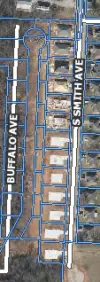
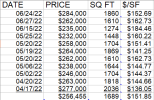
1672942002593.png This street is a Horton homes development of 13 lots (1 has not sold and was used as a model home) Would anyone build more uniform housing than Horton? I mean size may vary, but the quality and the crews were all the same. All the lots were the same and Horton bought the land and replatted it. Is the sales approach any more variable? But I can extract the land value, use the cost book to determine a TYPICAL cost, and the difference between the land+building cost is the EP and soft costs.
1672943479490.png


they are certifying they put 100% of their weight on the SCA
Which means USPAP is not valid and FNMA sets the rules, right?
 
Status
Not open for further replies.
Find a Real Estate Appraiser - Enter Zip Code

Copyright © 2000-, AppraisersForum.com, All Rights Reserved
AppraisersForum.com is proudly hosted by the folks at
AppraiserSites.com
Back
Top