• Welcome to AppraisersForum.com, the premier online  community for the discussion of real estate appraisal. Register a free account to be able to post and unlock additional forums and features.

As Of Effective Date: Meaning

Status
Not open for further replies.
Please start a different thread about future value as purpose of an assignment. I recognize that an opinion of MV can be developed for any time frame. But since the great majority of assignments and lending assignments are for current/recent past effective date MV opinions, and use the MV definition I posted, that is what I want this thread to focus on.
 
Please start a different thread about future value as purpose of an assignment. I recognize that an opinion of MV can be developed for any time frame. But since the great majority of assignments and lending assignments are for current/recent past effective date MV opinions, and use the MV definition I posted, that is what I want this thread to focus on.


So to recap:
MV can be developed for any time frame

But you want to limit market value to only past and current data perspectives, because that's most of the work you do?

Then you need: a new definition of market value, and to stop twisting definitions to fit only your needs.

.

.
 
A) Based on a complete visual inspection of the interior and exterior areas of the subject property, defined scope of work, statement of assumptions and limiting conditions, and appraiser’s certification, my (our) opinion of the market value, as defined, of the real property that is the subject of this report is $ , as of , which is the date of inspection and the effective date of this appraisal.

B) DEFINITION OF MARKET VALUE: The most probable price which a property should bring in a competitive and open market under all conditions (till end of definition)

For appraisers, the definition of market value is linked to our appraisal development . The most probable price a property should bring, is linked to our appraisal development. B is contingent on A.
 
Last edited:
Marion, I want to limit the discussion on this thread to what most assignments consist of, purpose of assignment develop an opinion of value as of X effective date, which is a current or recent past effective date. Very few assignments are purpose of a future effective date opinion of value. Again, please start your own thread about future values since they are (for most appraisers) a rare assignment type, and they are not the assignment type seen for lending purposes, which is where the controversy is about trends of next prices of pending sales, Contract price vs market value opinion .
 
Marion, I want to limit the discussion on this thread to what most assignments consist of, purpose of assignment develop an opinion of value as of X effective date, which is a current or recent past effective date. Very few assignments are purpose of a future effective date opinion of value. Again, please start your own thread about future values since they are (for most appraisers) a rare assignment type, and they are not the assignment type seen for lending purposes, which is where the controversy is about trends of next prices of pending sales, Contract price vs market value opinion .

No J,

It is a rare assignment type for you, but a very typical assignment type for commercial work to opine market value at full occupancy in the future. Because you only do a small corner of appraisal assignments, that does not make those assignment types the driving factor of definitions designed to apply to all assignment types.

There in lies your initial problem. The definition of market value is applicable to any effective date, and as you see from your copied and pasted URAR verbiage, the URAR is limiting the effective date to only the date of the inspection.

The date of the inspection is not the defined "as of" date of the market value definition. It is a parameter of the work you are doing.

So you really want to discuss the parameters of the work you are doing, as opposed to making broad brush definition assumptions that don't exist.

.
 
a sale price which is ahead of what any other closed sale of a similar property sold for, including one that closed last week.
Isn't market value a reflection of the present value of future benefits?

By definition, closed sales are backward thinking. Proper market analysis is what allows appropriate adjustment, if applicable, for market conditions which yes can even change from week to week. But from a more practical perspective, a current contract is more like 4 to 6 weeks ahead of a closed sale that occurred last week. Can and do market conditions change that quickly? Yes! Have they changed that quickly in terms of any specific assignment? That can only be answered by a proper market analysis that is not constrained by limited thinking which excludes relevant variables.
 
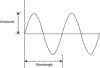
The problem is that the market is almost always on a sine wave upload_2016-5-2_8-42-34.png

As appraisers become more versed at how to properly use regression tools, support for market increases (or decreases) can be supported by noting where the current market is relative to the sine wave.
 
"present value of future benefits"

Ring a bell for anyone?

An investor's motivations and an owner's motivations are different. A residential owner needs to find someplace to live. Someplace reasonably close to work and, perhaps, reasonably close to a desirable, or acceptable, school. They don't have time to sit around until a deal is found that meets their investment requirements. They need to find someplace to live NOW.

In a buyer's market, there are plenty of options available. They don't have to get into a bidding war with anyone. They may have half a dozen or more VERY GOOD options, most of them having sellers that may need to sell NOW so that they can relocate to that new job, bigger house, smaller house, or whatever reason exists that has compelled them to disrupt their lives and relocate. Because of supply and demand, prices may be stable or may be declining.

In a seller's market, there are few options available. There are multiple buyer's who need someplace to live NOW. With few options available, prices get bid up. Sellers can receive multiple offers and, with professional advice from their agent, may select the option that represents not only a "good" price, but which is expected to close with minimal delay and trouble. For that reason, a cash buyer may realize a better price than a buyer with weak credit and limited funds. Regardless, because of supply and demand, prices are likely increasing. Depending upon the a variety of factors, including interest rates and buyer desperation, prices may be increasing rapidly. (Keep in mind that owners-users, particularly residential owner-users, buy on the basis of the most house they can get for the highest monthly payment they can afford. The actual "asking price" is essentially immaterial. The monthly payment is what matters.)

So, in an increasing market, if an appraiser fails to make appropriate market change adjustments, they have not valued the property for what it "should" bring today. They have valued the property for what it "should" have brought in the past.

So, JG, by your own argument in this thread, you have defeated your argument in other threads. It is what it is, not what it was.


Edit: I see Howard and I were stating essentially the same thing and the same time. Great minds think alike.

 
Last edited:
Isn't market value a reflection of the present value of future benefits?

Yes, however, the definition demands it be based on retrospective acitvity (closed sales). It is assumed the parties of all the closed sales paid a price that reflected the present value of future benefits.

By definition, closed sales a backward thinking.

Isn't value always based on "backward thinking", aka past historic evidence of prices/marketing times? A painting is put up at auction with a reserve price of X$, and that reserve price is based on past sales of the painting and other works by the artist. A new artist, maybe just as talented but with no history of closed sales, their work often commands very little.

In RE, agents develop CMA's based on closed sales to show buyers what they think a property is worth. Value is always inclusive of past activity.

Proper market analysis is what allows appropriate adjustment, if applicable, for market conditions which yes can even change from week to week. But from a more practical perspective, a current contract is more like 4 to 6 weeks ahead of a closed sale that occurred last week. Can and do market conditions change that quickly? Yes! Have they changed that quickly in terms of any specific assignment? That can only be answered by a proper market analysis that is not constrained by limited thinking which excludes relevant variables.

All that is true, but value is supposed to have an enduring element, one that is "more" than a passing or rapidly changing market trend. Therefore in a value opinion, a rapidly changing or very new trend can be part of the analysis, but should not comprise all the analysis. Whereas a RE agent or a buyer can base a price 100% on the most recent or rapidly changing trend, since they have no obligation to do otherwise.
 
So, in an increasing market, if an appraiser fails to make appropriate market change adjustments, they have not valued the property for what it "should" bring today. They have valued the property for what it "should" have brought in the past.

Sorry Ken, but that is not what the definition and market exposure indicates we do. In an increasing market, we make time (market change adjustments) based on past sales up to and including the effective date (yesterday to make it simple). So, if the most recent sale closed yesterday at 285k, and we made time adjustments to the other sales and the highest indicated value is 285k, how do you make a jump from that to what a pending listing is bid up to 300k?

We don't tell buyers what to pay, or how to behave in a seller's market. But, we are supposed to opine per the definition for a client ( client is a lender in this example). We don't tell buyers what to pay. Our subject SC price is 300k, we only got to 285k even making time adjustments. If buyer wants to pay 300k, they can put another 15k down to make it happen. We are working for our client, not to make deals happen for cash poor buyers.
 
Status
Not open for further replies.
Find a Real Estate Appraiser - Enter Zip Code

Copyright © 2000-, AppraisersForum.com, All Rights Reserved
AppraisersForum.com is proudly hosted by the folks at
AppraiserSites.com
Back
Top