- Joined
- May 2, 2002
- Professional Status
- Certified General Appraiser
- State
- Arkansas
Me, too.... since I don't work for the scumbags...whatzit2me? Crickets, George? Do you even work for them either?(which personally, I approve of them tightening up).
They should be required to produce proof... and saying that we had some skippies report the quality to be q4 and not q3 isn't proof.All this means is that Fannie is becoming a higher maintenance user than in the past. Probably others will follow suit.
I have a couple clients that are much more demanding than the GSEs have been (in the past). If they're tightening up now then they're playing catch up with some of the other lender types.Me, too.... since I don't work for the scumbags...whatzit2me? Crickets, George? Do you even work for them either?
I had a certified general claim a basic 3 br 2 bath rectangular rancher that is easily a q4 house with standard materials you would see in most communities was actually a q2. I just wonder what they do when they actually have a q2 house. I really don't care if a house is between q4 and q3 what someone calls it.They should be required to produce proof... and saying that we had some skippies report the quality to be q4 and not q3 isn't proof.
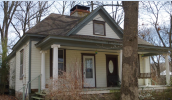
So what is the "quality" of this house - not the condition, just the quality - bilt about 1930 - 9' ceilings, wood floors, plaster walls,I had a certified general claim a basic 3 br 2 bath rectangular rancher that is easily a q4 house with standard materials you would see in most communities was actually a q2. I just wonder what they do when they actually have a q2 house. I really don't care if a house is between q4 and q3 what someone calls it.


CGs are all rookiesI had a certified general claim a basic 3 br 2 bath rectangular rancher that is easily a q4 house with standard materials you would see in most communities was actually a q2. I just wonder what they do when they actually have a q2 house. I really don't care if a house is between q4 and q3 what someone calls it.
Probably a Q4So what is the "quality" of this house - not the condition, just the quality - bilt about 1930 - 9' ceilings, wood floors, plaster walls,
View attachment 60403
View attachment 60404
Why?Probably a Q4
Based on the picture it looks like Q4. It is not the condition that is telling me that. Looks like a standard shape house, not from a designer plan. Standard fenestration. 9' ceilings is not enough for me to call it q3. I can see your argument that plaster may be more costly, but not more desirable. I wouldn't call it having significant exterior ornamentation.Why?
After all - if there is a relationship between age or condition, why doesn't FNMA not even mention age?
I miss the old Boeckh appraisal system. It classified houses by age from pre-war and post war for one. I can presume that a house (here at least) wasn't even insulated prior to the energy crisis of 1972-3. In fact, FHA didn't even require those little cookie cutters to have insulation until later. In 73ish, some FHA houses had higher utility bills than mortgage payments and as a consequence entire subdivisions of them went into foreclosure.
So this house, was built in its day as top shelf housing. And it has features no modern house of similar size (1,000 SF or so) has. Large pillars, wood trim, wood subfloor, wood flooring, 9' walls. The quality is almost always established by the COST and we don't know the original cost. But I bet if you did a comparison of appraisals you would find a correlation between the QUALITY RATING and the CONDITION RATING... a QUALITY house in poor CONDITION, will get downgraded from its actual QUALITY. Condition and quality should be separate items.
This house from a cost book rating has a substantially higher RCN than does most newer houses of its size. But even those don't account for insulation, nor plaster over sheetrock (plaster is more expensive but perhaps not superior although commonly though of as superior materials)