• Welcome to AppraisersForum.com, the premier online  community for the discussion of real estate appraisal. Register a free account to be able to post and unlock additional forums and features.

A Simple USPAP Question On An " Appraisal Report"

Status
Not open for further replies.
If the 'peer review' of the report, at a minimum shouldn't it inlude an inspection?
Residential? or What? There are lots of property that isn't "Inspected" or is a very limited inspection. I did a 300 acre woodlot. Did I inspect every tree? No, I did venture down the passable roads, I did view the perimeter roads, I did not "inspect" everything. I certainly can tell more from an aerial photo and soils map than I can from "inspecting" large land tracts.
nd should the report file so complete that a non-appraiser, state board investigator be able to come to the same conclusion?
I cannot imagine two appraisers with identical workfiles in hand, coming up with an identical value. And if so, it would be either serendipity or the comps were extremely numerous and close in a cookie cutter property.
 
Even if I had the appraisers report and his work-file I could rarely replicate his adjustments or his final opinion of value. In a review or as a peer it's my job to verify data but how it's used is determined by the appraiser. How could I prove his $200,000 Ocean View adjustment was the correct number ? I could determine by the data that a view location was warranted but would my number be exactly the same as his- No it probably would not be the same yet in the end we both may arrive at a similar value.

Without physically inspecting a property there are just to many factors to consider. Buyers and sellers create the market and they don't think in terms of separate line item adjustments. If five appraisers each physically inspect a property none of their reports would have the same adjustments because like buyers and sellers appraisers also have bias , Appraiser Bob is thrilled with the location and view but appraiser Sally believes the view is over-rated and not that significant , both may end up with a similar MV but one made a larger view adjustment while Sally did not make a separate view adjustment but did make a combined view and location adjustment which in total was similar to Bobs combined adjustments.The end results were similar and neither one was misleading or created an-inflated value.

In Summary: Even if my 10 Peers used regression analysis for every single major adjustment thereby removing any emotion or bias all 10 appraisals would have different adjustments , Now we give all 10 peers the same copy of a work-file and all the data and give them 24 hours to duplicate the original report- 24 hours later we sit down and review all 10 and guess what none are the same and the opinions of value could easily have a range of $925,000 to $1,000,000 - The original appraisal was at $965,000 so once again as A peer or reviewer I may have interpreted the data differently than the original appraiser but hopefully our end results would be similar.
 
Terrel,
Let's assume a standard residential report. I'm not looking for identical values, but am asking if it is a USPAP violation if the report/workfile is not so complete that the person reviewing the file can't replicate or agree with the depth of data and adjustments, and conclusions, that its therefore a violation.

upload_2018-7-16_7-59-21.png
 
What aspect does the inspection of the subject and comparables play?
I would expect the inspection of the subject would include the data necessary to meet the agreed upon SOW. Ditto for the comparables. I disagree with Marion that reference to MLS is sufficient, but I could be wrong and she could be right. Personally, I retain the MLS sheets in my workfile just in case.
For a residential property
1. The information about the site and the neighboring uses, as observed, would be relevant and expected
2. The information about the improvement(s), likely including a sketch w/floor plan, and an identification of the construction components, condition, and finishes; as well as any needed repairs

If the 'peer review' of the report, at a minimum shouldn't it inlude an inspection?
That depends. A "peer review" is not necessarily the same as a review for a client with a specific intended use. What is the intended use of the peer review? USPAP compliance? Then an inspection may or may not be necessary depending on the SOW of that review.
Or should the work file be so complete that a "white room" reading the workfile should be sufficient to come to the same conclusions?
Not necessarily. The workfile should be sufficiently complete such that questions regarding the report's data can be supported.

And should the report file so complete that a non-appraiser, state board investigator be able to come to the same conclusion?
Again, this depends on what the state board investigator is tasked with achieving.
If the investigator is tasked with confirming that the workfile contains the necessary information to support the conclusions as reported in the appraisal, that should be fairly straightforward (that's the requirement of the Record Keeping Rule).
If the investigator is tasked with concluding his/her own opinion of value of the subject using only the data contained within the workfile, that may be possible as well, but that's not what the workfile is intended to do (IMNSHO).

Here is the definition of Workfile found in the 2014-2015 USPAP:
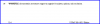
upload_2018-7-16_9-12-0.png

From Advisory Opinion 32 (of the same USPAP Version):

upload_2018-7-16_9-40-35.png

Finally, an FAQ from 2014-2015:

upload_2018-7-16_9-42-23.png

The workfile is a compliance mechanism designed to protect the appraiser. It isn't designed (IMO) to serve as the building-blocks of some other (peer or investigator) to replicate the appraisal as I completed it. It is designed to contain the information, data, and (if necessary) outside-the-report analysis to support what I did communicate in the report (my opinions and conclusions).
While maybe some peers or investigators could take all that data and come to the same conclusion, it could be that they cannot. What I must be able to do is to take that data and support the conclusions and analysis I came to. If I can do that, my record keeping requirements are maintained.
If they want to question the credibility of my results and analysis, it isn't going to be based on a Record Keeping Rule violation, it is going to be a SR-1 violation (as in I didn't use the appropriate methodologies or techniques in concluding what I did).


Elliot-

I don't know how much of the specific situation you can share. I can appreciate it being sensitive. I assume this involves an appraiser you know or a decision that has come to your attention. Not knowing the dynamic of your state board, you may want to cautious on how much you want to explore this issue on a national forum. No problem if that is the case.

But if you can share more of the specific, it might assist in getting a more specific answer (or opinion).

 
Denis,
Let's say an appraiser makes a river front view adjustment, bases it on a percentage of the base land value, and based on residual land values and says it a 10% adjustment to Comparable No. 1 which does not have a river front view. Let's say the appraiser has the residual math in his work file. Is that adequate for USPAP or is there some higher standard to 'prove' the adjustment, so that the reader can replicate the adjustment process?

Let's say the appraiser says, "I've done assignments like this 100 times before in the last 3 years and I've come to the conclusion that an adjustment of about 10% to the base land value for the neighborhood is appropriate and confident the market would make the adjustment. But in the present report, there isn't enough sales data to make a proof based on actual residual from sales."
 
Denis,
Let's say an appraiser makes a river front view adjustment, bases it on a percentage of the base land value, and based on residual land values and says it a 10% adjustment to Comparable No. 1 which does not have a river front view. Let's say the appraiser has the residual math in his work file. Is that adequate for USPAP or is there some higher standard to 'prove' the adjustment, so that the reader can replicate the adjustment process?
That would demonstrate support for the adjustment. Is one "paired sale" enough? That seems a little picky to me. But I'll assume that the same process can be applied to other data in the workfile so that the reasonableness of the conclusion can be tested.
In my real world experience, trying to extract an adjustment out from data similar to what you describe, if I apply it to 2 or 3 pairings, I might get a result of "zero" to 15%. IMO, as long as I present the data and provide my logic for reconciling to whatever point I determine (5%? 10%? 15%?) and that data is in the workfile, I've satisfied the Record Keeping Rule.

Let's say the appraiser says, "I've done assignments like this 100 times before in the last 3 years and I've come to the conclusion that an adjustment of about 10% to the base land value for the neighborhood is appropriate and confident the market would make the adjustment. But in the present report, there isn't enough sales data to make a proof based on actual residual from sales."
This is where it gets dicey for the appraiser. "Based on my experience doing similar properties in this neighborhood" might be the truth. But if the there isn't data to support that conclusion in the workfile, it could be questioned.
Now if I were the investigator and I thought this issue were material, I'd ask the appraiser "Send me the workfiles of 2 of the reports where you did do the analysis so I can evaluate it."
To me, what would get the appraiser in trouble is if the data that is contained in the workfile conflicts/contradicts what was done in the report. In the above specific, let's say my experience tells me that there is a 5% location adjustment for being located on a feeder street in a residential neighborhood. But I have sales on feeder streets and there is a 10-20% market reaction. In that case, because the data in the workfile is materially different from what the report concluded, left by itself that could be an issue.
 
If you only have the appraiser's workfile (it should include the report, the data, analysis, etc.....according to USPAP) should any appraiser, a state real estate board, or a forensic appraiser be able to duplicate the report and its data, adjustments, and conclusions of value to meet USPAP requirements. Please include consideration of the standards of your peers, as provided by USPAP.

Pretty simple question. And if they can't should your appraisal license therefore be revoked?
From a pure USPAP perspective, such a standard exceeds what USPAP requires. USPAP requires the workfile content to be sufficient to show compliance. It does NOT say sufficient for someone else to replicate results. The allowance for references to location of information (rather than the actual information) alone precludes such a standard.
 
That would demonstrate support for the adjustment. Is one "paired sale" enough? That seems a little picky to me. But I'll assume that the same process can be applied to other data in the workfile so that the reasonableness of the conclusion can be tested.
In my real world experience, trying to extract an adjustment out from data similar to what you describe, if I apply it to 2 or 3 pairings, I might get a result of "zero" to 15%. IMO, as long as I present the data and provide my logic for reconciling to whatever point I determine (5%? 10%? 15%?) and that data is in the workfile, I've satisfied the Record Keeping Rule.


This is where it gets dicey for the appraiser. "Based on my experience doing similar properties in this neighborhood" might be the truth. But if the there isn't data to support that conclusion in the workfile, it could be questioned.
Now if I were the investigator and I thought this issue were material, I'd ask the appraiser "Send me the workfiles of 2 of the reports where you did do the analysis so I can evaluate it."
To me, what would get the appraiser in trouble is if the data that is contained in the workfile conflicts/contradicts what was done in the report. In the above specific, let's say my experience tells me that there is a 5% location adjustment for being located on a feeder street in a residential neighborhood. But I have sales on feeder streets and there is a 10-20% market reaction. In that case, because the data in the workfile is materially different from what the report concluded, left by itself that could be an issue.

My original Mentor was a MAI at a Savings and Loan and he would not allow us residential guys to make view adjustments. His theory was buyers of residential real estate don't make separate view and location adjustments because they look at the location and view in totality or one package.

He made us make one adjustment and then explain in our report. I Didn't always agree with his methodology but I noticed just how subjective some of the view adjustments were and it was a lot easier defending a total location/view adjustment rather than a single line view adjustment. I hope my work-file and adjustments are adequately supported but you never know when getting reviewed by a State Board. Flip a Coin !
 
Last edited:
From a pure USPAP perspective, such a standard exceeds what USPAP requires. USPAP requires the workfile content to be sufficient to show compliance. It does NOT say sufficient for someone else to replicate results. The allowance for references to location of information (rather than the actual information) alone precludes such a standard.

1000 dittos.
 
Status
Not open for further replies.
Find a Real Estate Appraiser - Enter Zip Code

Copyright © 2000-, AppraisersForum.com, All Rights Reserved
AppraisersForum.com is proudly hosted by the folks at
AppraiserSites.com
Back
Top