• Welcome to AppraisersForum.com, the premier online  community for the discussion of real estate appraisal. Register a free account to be able to post and unlock additional forums and features.

End Of Life Solar

  • Thread starter Thread starter Deleted member 142783
  • Start date Start date
Status
Not open for further replies.
As I said, it is the savings in the utility bill by virtue of having the system.

2,000sf house: average monthly electric bill $175.
Bill with system (excluding any net-metering payment for excess energy) $85.
Net savings = $90/month. I "earn" that savings because I'm not buying as much energy from the utility company. If they pay me $100 on top of that for excess energy they buy from me, I don't consider that in my model.
That "savings" ($90/month) is the income used in the model. Only the savings. I've said this repeatedly, and you and I have discussed this often (but not recently... except for now) on this forum.

Again D,
That $90 is paid to you through some program. While I realize California has different laws than many places for this issue, You absolutely must address the stability of that monthly $90 "savings".

Because when the electric company won't pay retail price and opts instead for a whole sale price of $0.03 or less per kw, and your $90 a month becomes $5 a month, and your expected time to recoup the initial investment now extends from 20-65 years based on the "savings" at wholesale prices, instead of the "savings" at retail prices which was sold to you,

well .......... everyone hopes it's not their report that did not address the issue.

Now if you want to play carbon credit reimbursement, which says that at the end of the year, the true-up statement says you generated more electricity than you used, well, I believe there was a national market to sell those credits too, except I don't remember seeing any IPO for one hit Wall Street. I could have missed it, or maybe it's an old boys club for politicians and owners of electric utility companies, but either way, where is the contract that enforces those payments beyond the last day they sent a payment?

But from what I've seen, those are just roll over credits that can carry year to year, or can carry for 6 months without being reimbursed.

Just depends on the specific utility company.

..
 
credit.7516a62a1de0.png

What will happen to my LADWP net metering bill credits?
If your system produces excess energy, then your bill will be credited for the excess power sent back to the grid at a retail rate. These credits never expire. The excess bill credits cannot be used to offset taxes or other charges that are not related to energy. If there is credit remaining on your account if you terminate your service, the balance will go to LADWP.

https://www.energysage.com/net-metering/ladwp/

:rof::rof::rof:
 
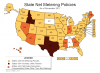
Where does PG&E offer net metering?
PG&E services the state of California from as far south as Bakersfield to just below the Oregon border, servicing over 5 million households. PG&E offers net metering to almost all of their customers, with a few exceptions. There are a few areas in San Francisco and Oakland that do not qualify for net metering. A few other disqualifications can be read here.
https://www.energysage.com/net-metering/pge/

Turning the Red line Green aint possible?

.
 
Is Florida Power and Light net metering the best in Florida?
FPL is not the only utility in Florida that offers net metering. Tampa Electric Company, Gulf Power, and Duke Energy all offer net metering programs with similar to structure to FPL’s. All programs provide customers with payment for credits not used to offset energy bills by the end of the year. Of the four utilities, FPL has the highest application fee for Tier 2 and Tier 3 systems, though those costs are largely irrelevant to residential customers.

Be careful those comps are using the same electric utility companies.

:rof:
 
History
Ohio’s original net-metering law was enacted in 1999 as part of the state’s electric-industry restructuring legislation. The Public Utilities Commission of Ohio (PUCO) later revised its net metering rules in March 2007, prompted by the federal Energy Policy Act of 2005 (EPAct 2005). Initially, the Public Utilities Commission of Ohio (PUCO) required utilities to credit customer net excess generation (NEG) at the utility's full retail rate. However, in June 2002, the Ohio Supreme Court decided that this exchange was illegal (Case No. 01-0573) and ruled that each utility must credit NEG to the customer at the utility's unbundled generation rate. Legislation enacted in May 2008 (S.B. 221) further amended Ohio's net metering law by: (1)a limit on net metering to any time that the total rated generating capacity used by customer-generators is less than one percent of the provider’s aggregate customer peak demand in the state; and (2) removing all limitations related to energy generation technology and system size on systems sited at hospitals.

https://www.energy.gov/savings/net-metering

Oh man,
they keep changing the rules.

.
 
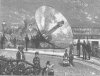
Net metering credits not needed for the 1878 Mouchot solar generator. :)

Mouchot1878x.jpg
 
Nevada Governor Brian Sandoval signed Assembly Bill 405 into law on Thursday to the cheers of solar companies and advocates. AB 405 reinstates net metering for rooftop solar customers in Nevada, after utility regulators eliminated the policy in December 2015, throwing the Silver State’s solar market into disarray.

Because the policy change was applied retroactively, it triggered enormous public outcry, and the steep new fees effectively put a freeze on new rooftop solar installations. Nevada saw a 32 percent decline in solar jobs last year after large residential installers chose to pull out of the state. But with the new law now in place, Tesla, Sunrun and Vivint Solar said they plan to resume sales immediately.

https://www.greentechmedia.com/arti...olar-law-is-about-much-more-than-net-metering

I believe the utilities can't be profitable or reliable if rooftop solar generation is a signification part of the base.

Rooftop residential solar production means the utility can't sell power to those customers that were part of the base load at the same quantities as before.
 
The Utility Death Spiral, as imagined and described a few years back, describes a hypothetical situation in which the price of rooftop solar becomes sufficiently attractive that large numbers of people start installing their own rooftop solar rigs, while still relying on the grid for power as backup at night or during peak times. This presents a big problem for utilities, who by law have to charge consumers per kilowatt-hour they consume and are mandated to provide service to everyone in their area: if large numbers of people move to distributed rooftop solar, their revenue will go down significantly, but their operating costs won’t go down at all (in fact, they might even rise, as grid balancing becomes progressively harder). This would force them to raise rates for their remaining customers, who would then become in turn incentivized to adopt their own rooftop solar rigs, perpetuating the problem in a positive feedback cycle (hence the term, ‘Utility Death Spiral’).
 
Status
Not open for further replies.
Find a Real Estate Appraiser - Enter Zip Code

Copyright © 2000-, AppraisersForum.com, All Rights Reserved
AppraisersForum.com is proudly hosted by the folks at
AppraiserSites.com
Back
Top