
• Welcome to AppraisersForum.com, the premier online  community for the discussion of real estate appraisal. Register a free account to be able to post and unlock additional forums and features.

FHA Manufactured

Status
Not open for further replies.
Holy Cow! Your market accepts trailer jacks as a foundation? In 30 years of looking under manufactured housing, I've never seen a foundation system like this. I know I wouldn't want it. Is this common in anyone else's market?????
 
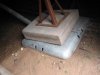
Attached are some photos of typical foundation systems in Arizona which meets local, state and FHA requirements. See page A-28 of HUD's Permanent Foundations Guide for Manufactured Housing. This would be an example of a Type C Foundation Type as described on page 1-2 of that handbook. By the way the concrete block wall in one photo is NOT the foundation, it does not provide any support what so ever for the manufactured housing unit. It stops about two inches below the unit and the only purpose is to keep water, dirt and critters out from under the home.
 

Attachments

  • IMG_6778.JPG
    IMG_6778.JPG
    48.2 KB · Views: 29
  • IMG_6382.JPG
    IMG_6382.JPG
    58.1 KB · Views: 21
Jo Ann.......

In the left photo, what's the bluish "pad" below the concrete pad.

Do you know if the steel jack stands are physically attached to the frame with bolts? Or is the home just sitting on a flat surface above the jack screw?

In my area, most supports are ungrouted concrete blocks with wood wedges on top of concrete runners or full slabs. The home is not physically attached to the supports.

There is also a new support system which I call 'earthquake peds' which have a 2' square base, an adjustable center column, with physical attachment to the frame. This keeps the home on the peds in case of ground movement.

Dave
 
The bluish pad below the concrete pad is a metal plate or pad and provides additional ground support for the jack. The jacks are bolted to the frame of the manufactured home. Check out the Permanent Foundation Guide for Manufactured Homes. It is available at http://www.HUD.gov That is the guidebook a licensed engineer has to be very familiar with. That is what they are referring to and certifying that the foundation system and installation meets FHA requirements.
 
There is no reason to delete the photos other than to help the lender be deceptive.
 
Holy Cow! Your market accepts trailer jacks as a foundation? In 30 years of looking under manufactured housing, I've never seen a foundation system like this. I know I wouldn't want it. Is this common in anyone else's market?????

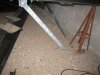
Apparently so, as I have seen this type of system under a few manufactured homes in northern and southern NV. Like Jo Ann stated with her pics the jack stands are bolted to the frame, actually with mine they have a jackbolt that screws down into the frame against a steel pad. I don't really see a problem with that type of foundation as we do not get very bad weather here that would cause a problem. We get some straightline winds sometimes up to 60-70mph every now and then, but other then that its just rain and snow. I probably wouldn't want this system back East or down South due to tornados and hurricanes or in CA due to earthquakes. Although with the earthquakes it may not be bad as it would allow some room to wiggle and absorb the quake maybe?
 
Last edited:
Jo Ann,
On the photo to the left it looks like the bluish/grey plate or pad under the concrete is on top of the ground. Isn't the requirement the footing has to extend 6" into the ground or 6" below frost line? So, if the frost line was at ground level wouldn't the footing still have to be at least 6" into the ground?
 
just a brief reminder---------foundations per FHA are site specific and, therefore, different plans for different situations.....
 
Typical installations for the lower elevations of Arizona have concrete pads sitting on top of the ground since there is not a frost line that affects the dirt. Even when we had nine inches of snow this winter for about a week, the surface didn't freeze. Higher elevations (Flagstaff, Prescott, Showlow, etc) would be a different story and would require the concrete pads to be below the surface. State inspectors and licensed engineers for FHA inspections approve that type of installation. Where we have problems in the lower elevations is expansive soils (the ground is sinking). Those locations require footings for both site built and manufactured homes that go below the surface several feet. My home is constructed of adobe in an area that is not expansive and the footings are about one foot deep. Homes built in expansive soil areas may have footings that range from two to four feet deep. The expansive soil areas have usually been cotton fields in previous years. And then in Karl's area they have problems with fissures. I don't know how deep the footings have to be in that area (although I suspect nobody worries about until a house falls into one). Oh, by the way, that photo was taken less than a week ago for a FHA sale and my report (as always) was subject to an inspection by a licensed engineer for compliance with the Permanent Foudation Guide for Manufactured Homes. So the lender will be finding out whether it is acceptable by the engineer or not. Area is high desert that has never been farmed and most of the soil is caliche which can be as hard as concrete at times.
 
Status
Not open for further replies.
Find a Real Estate Appraiser - Enter Zip Code

Copyright © 2000-, AppraisersForum.com, All Rights Reserved
AppraisersForum.com is proudly hosted by the folks at
AppraiserSites.com
Back
Top