• Welcome to AppraisersForum.com, the premier online  community for the discussion of real estate appraisal. Register a free account to be able to post and unlock additional forums and features.

FNMA Messages

Status
Not open for further replies.
How would you rate it in fixing "good plus, good, good minus, average plus, average, average minus?"

Etc.etc.etc.....etc...,not just condition either?

My questions relate more to value in this post as well as the competency of the appraiser. I'm not an architect. An architect firm either public or private could have helped along this line of reasoning imo, as well as other issues like cost estimates.

What? How many appraisers have been eliminated since C and Q? How many have been made better? I am not knocking it. I am saying it could be better.
 
Last edited:
I have always interpreted the C3 definition note “The improvement is in its first stage of replacing short-lived building components…” to mean that an older property which is no longer in its first cycle of replacing short lived building components can never be a C3 and that the age of the property is a determining factor in the condition rating even if it has been recently updated because it is no longer in the first cycle of replacing short lived building components.

I suspect that this may be why CU is generating this error message based on the age of the property. It is good information to get from an UW posting about this error because many appraisers interpret this differently.

Phil-

Doesn't the last sentence (which I've highlighted below) reconcile how an older property can be "C3"?

upload_2016-12-29_9-19-29.png

I interpret C3 as follows:
1. In the first-cycle of replacing short-lived building components (which would put the house in the 10-15 years chronological age group)
or
2. A property in which the short-lived building components have been replaced...but not to as-if it were gutted and everything were renovated (C2)

Certainly the second condition would allow for a 50-year old home to attain the C3 rating, no?
 
A 50 year old property can be a C3 (due to replacing/updating), and a 20 year old property can be a C4 (no updating and some deferred maintenance

Age can be a factor, but unless brand new, it is not the only factor determining a C rating.
 
Some appraisers and GSE's have way too big of an opinion of themselves to ask for help from somebody like an attorney or an engineer or a little old builder or anybody else like a buyer and seller.
 
Phil-

Doesn't the last sentence (which I've highlighted below) reconcile how an older property can be "C3"?

View attachment 30697

I interpret C3 as follows:
1. In the first-cycle of replacing short-lived building components (which would put the house in the 10-15 years chronological age group)
or
2. A property in which the short-lived building components have been replaced...but not to as-if it were gutted and everything were renovated (C2)

Certainly the second condition would allow for a 50-year old home to attain the C3 rating, no?

Hello Dennis,

Good point. I think that last sentence could be interpreted to apply to an older property or it could be interpreted to still be referring to a property in its first cycle of replacing short lived building components in which the majority have been replaced but the home has not been completely renovated. I don’t think it is clear either way.

However, the note for the C2 condition does refer to an older property which would imply that age is not a determining factor so I agree that it leaves it open for a property no longer in its first cycle of replacing short lived building components to be classified as a C3 or C2 by appraisers. Of course, the question remains as to how age relative to condition rating is being interpreted by CU since the original post seems to indicate that the CU interpretation is using actual age as a determining factor in condition ratings.
 
Unfortunately, we cannot override the codes and the score stands as is. If the score is 2.5 or less FNMA is now giving lenders full indemnification (no future repurchase possibility). On this report the effective age is 35 years and actual age is 75 with no deferred maintenance noted?

i agree with your not understanding. an effective age of 35 years isn't close to a c3. what deferred maintenance to mention with a 35 year old interior. it's obvious, and you are asking the right question. the right answer is c4. dangerous that we still have appraisers this stupid. bad for all of us. that bad shouldn't be appraising. didn't the pictures show an older mod kitchen & bath? the 1970 look is obvious, not sure of the 1980 look being obvious. put that dope on the bank's watch list.
 
I am not an appraiser but I have been an UW and have reviewed appraisals for over 30 years.

I review appraisals for a major lender and I am starting to see a bunch of new warning messages from FNMA Collateral UW. I am looking at an appraisal where the subject is noted as being in C3 condition. The error message I have received is "The condition of C3 conflicts with the reported age". There is no deferred maintenance so it should not be a C4.

My understanding is that the age is not what drives the condition rating so why would FNMA have this error message out there affecting the scores. Now that FNMA gives full indemnification for loans that score 2.5 or lower I am noticing a lot more hits like this.

The funny thing is that the comps in the report have similar ages and C3 rating as well and the warning message is only firing for the subject?

Can anyone provide an appraiser's opinion on this one?

Interesting. I have a couple of Clients who continuously send revision requests for my effective age being "atypical given actual age". I have created language to put in Reports for this Client and now simply respond "see addenda for effective vs. actual age comment". Not all of my Clients have such a tickler about effective vs. actual. This is, of course, regardless of whether the Subject is a C2 or a C4.

The only thing clear about effective vs. actual imo is the somewhat arbitrary but imposed industry standard that any property with > 50% depreciation (30 of 60 years for example)....Appraiser must list what repairs are necessary to bring Subject to 50% or < depreciation. I s'pose if nothing else this gives Appraisers some 'basis' to formulate a degree of continuity within our collective Reports. Unfortunately....the opinion(s) expressed by individual Appraisers about the opinion of effective age remains unabashedly subjective...an art rather than a science.

I can't speak for the Collateral UW and its processes and programming. In computer programming...you know the old expression?...poop in - poop out. This is yet just another algorhythm computer checker system for our highly personalized reports. So much of what is being done to 'improve' report consistency and quality provides just the opposite effect. I've reviewed many Reports only to find the original appraiser say something like "ya...I did it that way so that it would upload to the Client...if I did it any other way...their system would reject the Report.

I often ask myself....if the 'powers that be' really trust our work this little....why bother with Appraisals at all? Nearly every Report that I complete is highly customized. Nearly every property has some nuance that impacts value. Each Appraisal is a barrel full of puzzle pieces....carefully placed...and thoroughly explained. Once the report is submitted.... some bean counter is trying to cram my square report into his round hole.....and doesn't even bother to read the two full pages of custom comments at the addendum. 90% of the time....a revision request could have been avoided if the Reviewer (often unqualified) took time to read the Report. This has become less about whether any particular report is credible and competent...and more about whether any particular report meets the pre-programmed algorhythm for "pass" vs "fail". Square pegs do not fit in round holes says the computer.

When UAD began...the writing was on the wall. The 'industry' had found its way to instill continuity to a discontinuous product....to make all the reports be square pegs. The Appraisal Industrial Complex's attempt to turn Appraisal Reports into identical widgets rolling down the assembly line. It hasn't yet shown to be as bad is it could be....but the UAD format has imo "dumbed down" some Appraisers to little more than box checkers. The problem is...that a cumulative, compliant, and credible Report is often highly complex and much more than just a collection of checked boxes....regardless of what the unlicensed reviewer or AMC computer programmer would like to think. More importantly...UAD has the potential to data mine our work...and find "conflicting" bits of data to raise unnecessary alarms...while no attention is being paid to the nuances necessary to formulate a complex but credible analysis. Computers don't understand nuances....and neither do unlicensed appraisal reviewers. How many of your revision requests are for silly and unnecessary alarms programmed into your Cients computer report checker?....or in the unlicensed reviewers checklists?

Bottom line....if developing an opinion of effective age were an exact science....then we would all be relying upon the cost approach much more heavily. Opinions relating to property condition and/or construction quality have proven to be subjective among us humans....despite the fact that we all hold the identical UAD Definitions. If landing planes could be simplified like using a joystick to line up an 'X' cursor to a 'Y' target....we would all be pilots. Oftentimes the formulation of a credible Report is challenge enough....now we have to do our jobs correctly AND be certain that once completed...our reports will fit into the Client's square, round, oval, or octagonal hole...depending on the Client.
 
Last edited:
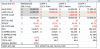
Calculate it using comparable sales.

View attachment 31257


Very nicely done....perhaps as good as it gets even! It doesn't change the plethora of variables, known and unknown, which cumulatively may/may not contribute to a calculation of physical depreciation. As precise as we may wish to be...and as much proof of our number crunching that we can keep in our work files ...the margin for error(s) as it relates to the development of an opinion of effective age remains large.
 
Status
Not open for further replies.
Find a Real Estate Appraiser - Enter Zip Code

Copyright © 2000-, AppraisersForum.com, All Rights Reserved
AppraisersForum.com is proudly hosted by the folks at
AppraiserSites.com
Back
Top