• Welcome to AppraisersForum.com, the premier online  community for the discussion of real estate appraisal. Register a free account to be able to post and unlock additional forums and features.

Hoarder's House?

Status
Not open for further replies.

Debra

Senior Member
Joined
Jan 15, 2002
Professional Status
Certified Residential Appraiser
State
Tennessee
Good Afternoon,

At what point does it become necessary to make an adjustment to clean out a dwelling that people are currently living in? The property that got me thinking about this has the Kitchen and bathrooms where you can use them. They are not bad and neither are the hallways. The rest of the house has stuff piled up at least 3 feet in most rooms with a small path to wall on (covered mainly with piddle pads for the dogs). It's a conventional refinance. Maybe it's just me but when I was there I thought if this were REO then the client would probably have to pay approximately $1,000 to a company to get some or all of the stuff out. By the way, I saw an appraisal that was done less than a year ago on this property and it looked about the same then as it does now and he didn't make a condition adjustment or anything (I know that doesn't matter-just saying-He normally does great work). So.....is there some sort of guideline for these things or ? There is no way to determine a market reaction? as I've been doing this for 20 something years and not seen a hoarder's house before. It got me to wondering at what point do you make comments and call for an adjustment.....how do you my piers handle such things?
 
Isn't the house assumed to be vacant on sale? (or no personal property included such as furniture)

Imo, hoarding would be an issue if it also showed deferred maintenance, of was of a weight that was causing floors to sag etc

This place sounds crowded with stuff, but same thing as if had normal furniture, one does not count the stuff inside or any cost to move it out.
 
I appraised a hoarder's house as an estate and when they moved boxes in the maple hardwood floors, there were termite tracks in the wood... The foundation? shot. Looked fine on the outside, brick, etc. So any part of the floor you cannot see, caveat the problem at the very least.
 
a true hoarder, yes there could be rot, bugs etc, vs a house just crowded with stuff
 
Good Afternoon,

At what point does it become necessary to make an adjustment to clean out a dwelling that people are currently living in? The property that got me thinking about this has the Kitchen and bathrooms where you can use them. They are not bad and neither are the hallways. The rest of the house has stuff piled up at least 3 feet in most rooms with a small path to wall on (covered mainly with piddle pads for the dogs). It's a conventional refinance. Maybe it's just me but when I was there I thought if this were REO then the client would probably have to pay approximately $1,000 to a company to get some or all of the stuff out. By the way, I saw an appraisal that was done less than a year ago on this property and it looked about the same then as it does now and he didn't make a condition adjustment or anything (I know that doesn't matter-just saying-He normally does great work). So.....is there some sort of guideline for these things or ? There is no way to determine a market reaction? as I've been doing this for 20 something years and not seen a hoarder's house before. It got me to wondering at what point do you make comments and call for an adjustment.....how do you my piers handle such things?

How can you market a home that you cannot see the condition of the surfaces.
 
My general feeling is if what I can see is neat and taken care of, then I am fairly comfortable with what I can't see. Conversely, if what I can see is neglected I am cautious about what I can't see. My recommendation would be to include an assumption that the presence of excessive personal property is not hiding any signs of deferred or neglected maintenance or any condition issues. I would support that statement with pictures and indicate it was not possible for you to judge the conditions of the floors (list the rooms) or the lower portions of the walls and anywhere else full observation was blocked or restricted.

I always hate to write negative things about someone's property, but the lender is your client and you are their eyes and ears when it comes to the condition and value of a property. Just state the facts and let the chips fall where they may.
 
I've done MANY hoarder homes and there are different levels of hoarders. The thing with hoarding is that you do not know what lurks underneath all that stuff. You cannot worry about hurting their feelings. Because there is no air circulating under all that stuff there is often mold, rotted floors, infestation, mouse carcasses. Especially if they have pets who pee and the moisture seeps under the hoard and air doesn't circulate and its like a green house under there.

Also consider that the home cannot be properly maintained in the majority of cases because access to rooms is limited. Carpets cannot be cleaned, walls cannot be painted, furnaces cannot be cleaned/replaced, etc. Because they are embarrassed by the hoard, they generally do not allow maintenance people in to make repairs.

Its also a safety issue. If a fire were to start the place would go up in a jiffy and it would be difficult for the residents to exit quickly.
 
Last edited by a moderator:
hoarderaftercleanup2.jpg hoarderaftercleanup3.jpg hoarderaftercleanup2.jpg hoarderaftercleanup3.jpg


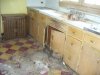
So here is an example of what lurks underneath after the hoard has been cleared and the reason one must be careful with how they describe condition.

(sorry duplicate photos....)
 
I always "subject to" ; there are more articles regarding safety all over the internet; if the house were to catch fire it makes for a deadly inferno for fireman and safety personnel
 
My general feeling is if what I can see is neat and taken care of, then I am fairly comfortable with what I can't see. Conversely, if what I can see is neglected I am cautious about what I can't see. My recommendation would be to include an assumption that the presence of excessive personal property is not hiding any signs of deferred or neglected maintenance or any condition issues. I would support that statement with pictures and indicate it was not possible for you to judge the conditions of the floors (list the rooms) or the lower portions of the walls and anywhere else full observation was blocked or restricted.

I always hate to write negative things about someone's property, but the lender is your client and you are their eyes and ears when it comes to the condition and value of a property. Just state the facts and let the chips fall where they may.

Please explain how that is a typical assumption used by literally all appraisers in all assignments? Because if it isn't, and one is screwing with Fannie's prohibition on modification of assumptions already included on the 2005 forms, you just contravened what you signed with adding that in. Anytime an appraiser does that with the 2005 version forms without using the subject to check boxes, they are asking for a Fannie lender forced buy back of the loan and to find themselves being sued by the lender.
 
Status
Not open for further replies.
Find a Real Estate Appraiser - Enter Zip Code

Copyright © 2000-, AppraisersForum.com, All Rights Reserved
AppraisersForum.com is proudly hosted by the folks at
AppraiserSites.com
Back
Top