OminousRun
Member
- Joined
- Oct 6, 2008
- Professional Status
- Certified Residential Appraiser
- State
- Florida
Yes! :icon_twisted:
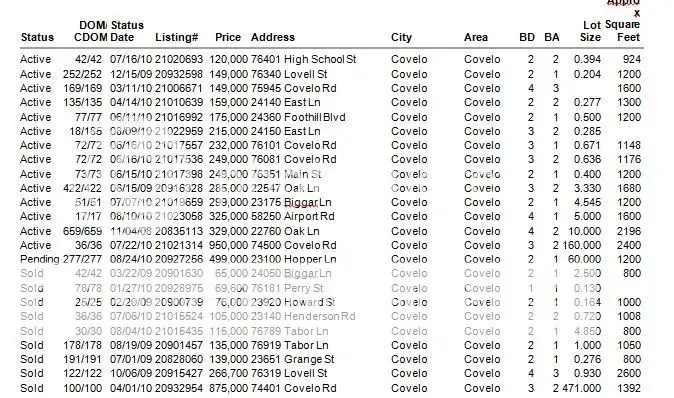
I examine solds and active listings reducing each from over 70 down to the 15-20 most comparable per search (and often doing multiple searches) using what I know about the subject to reduce the over 70 down to 15-20. I then use the data on the 15-20 from each search to reduce it down to the most comparable 6-12. I type in those 6-12 and weed out even further until I have what I feel I need. So, I have "used" 15-70 per search and thus I believe I hit your statement requirement.
You mention 30 due to statistical significance. That is fine, but remember that 30 would be expected to include the extremes, extremes we appraisers weed out as "not comparable". When doing a statistical analysis (such as a 1004mc) we may need those 30 to lend significance, but for the report we have continually excluded the less comparable and thus 30 is no longer the significant number. There is a reason "3+" is the "standard" for a typical (non-complex) property. :icon_mrgreen:

I'm happy to see you analyze large data set (which I do too). I'm sure many of the best appraisers on AF (Webbed included!!!) analyze large data sets, for sound statistical purposes, when completing an appraisal report. The more data you analyze, the lower the variance should be, resulting in a more accurate final estimate....
However....
We all know there are certain flaws with the way most appraisers complete their appraisal reports. Usually they start with the opposite methodology. They look for 1 or 2 "good comps". What's a good comp? I'm not sure. They find what they believe is the perfect comp (it may very well be) and build their report around that one comp. Unfortunately that method may lead to problems in the report, and may lead to problems with the UW, etc.
I find the more comps I put on a report and the more comps I analyze, the more accurate my appraisal becomes........it's an amazing thing!!!