Meandering
Elite Member
- Joined
- Feb 26, 2006
- Professional Status
- Real Estate Agent or Broker
- State
- Pennsylvania
APPRAISER HERO OPPORTUNITY ALERT!
11 hours ago
On Key Largo, a tropical isle famous for snorkeling and fishing, the floods began in late September.
While people expected high tides due to the season and the influence of a super moon, they were taken by surprise when a handful of streets in the lowest-lying neighborhoods stayed inundated for nearly a month with 16-inches (40-centimeters) of saltwater.
By early November, the roads finally dried up. But unusually heavy rains in December brought it all back again.
Residents have signed petitions, voiced anger at community meetings and demanded that local officials do something, whether by raising roads or improving drainage.
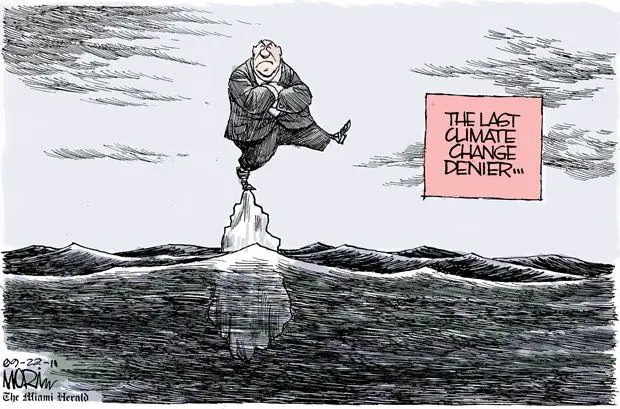
Sometimes, they clash over whether the floods are, or are not, a result of man-made climate change.
(Wait, didn't they say it was the super moon?)
Residents tend to agree on one thing, which is for many their life's biggest investment.
"We are all concerned about our property values," said Prew, the mother of 11-year-old twins, who estimates her home's market value at about a million dollars.
But they can broadly predict how much more water to expect -- up to 10 inches (25 centimeters) above the 1992 average in the next 15 years and 26 inches (0.6 meters) by 2060, according to the Southeast Florida Regional Climate Change Compact Sea Level Rise Work Group.
Absent measures to adapt the properties, that amount of sea level rise by 2060 would wipe out 12 percent of property value in the Keys, a string of 1,700 small islands built on porous, prehistoric coral reefs, said a 2011 report by Florida scientists.
Forecasts for 2100 are more dire. Since most of the islands are less than six feet (two meters) above the current sea level, a five-foot (1.5 meter) water rise in the Keys would erase 68 percent of property value in the area.
For now, south Florida real estate is booming.
More than half of transactions are paid for in cash, a sign of the powerful influence of foreign investors on the real estate market.
"Our entire market area continues to experience record level sales activity and significant price growth, consistently since 2011," said Lynda Fernandez, senior vice president of public relations at the Miami Association of Realtors.
Even in the Keys, sales are up 17 percent and the average home sale price is $512,000, up three percent from last year.
"So far we have not been seeing buyers being concerned with sea level rise, which I'm a little surprised given all the media attention it has garnered lately," said Lisa Ferringo, president of the Marathon/Lower Keys Board of Realtors.
But experts warn that plenty of cash and land stand to disappear in the next 15 years.
As much as $15 billion could be lost in Florida property by 2030, according to Risk Management Solutions (RMS), a leading catastrophe risk modeling company which advises insurance companies.
- Gentrification of the shore -
While many homeowners fear plummeting prices, some experts say they foresee the opposite.
"One thing we have expected to see is a gentrification of the shore, where people who can't afford to rebuild are selling out to people who can," said Clinton Andrews, a professor of planning and public policy at Rutgers University.
To a certain extent, keeping home buyers oblivious to the risks of living on the shore can help fuel the marketplace -- generating higher tax revenues to pay for upgrades to roads, power and wells, according to Robert Meyer, professor of marketing at the University of Pennsylvania.
"If there are scare tactics to discourage people from moving into the area and accelerate people to start moving out, then there simply isn't going to be the money to make the adaptations," Meyer told AFP.
In the Keys, local officials are still studying ways to address the floods, and are planning a pair of demonstration projects to showcase the possibilities, said Rhonda Haag, Monroe County Sustainability Director.
But sea walls are impractical for the 113 miles (182 km) of islands. Pumps can't keep up with water that comes in from all sides and also up through the porous ground. Simply raising roads could send excess water into people's yards.
"We are going to try to be creative," Haag told AFP.
"We don't want to rule out anything because we don't know yet what will or won't work."
http://news.yahoo.com/florida-keys-flood-property-worries-seep-041916596.html
But keep that money flowing.
Send in the Appraiser rescue squad. Protect those values.
11 hours ago
On Key Largo, a tropical isle famous for snorkeling and fishing, the floods began in late September.
While people expected high tides due to the season and the influence of a super moon, they were taken by surprise when a handful of streets in the lowest-lying neighborhoods stayed inundated for nearly a month with 16-inches (40-centimeters) of saltwater.
By early November, the roads finally dried up. But unusually heavy rains in December brought it all back again.
Residents have signed petitions, voiced anger at community meetings and demanded that local officials do something, whether by raising roads or improving drainage.
Sometimes, they clash over whether the floods are, or are not, a result of man-made climate change.
(Wait, didn't they say it was the super moon?)
Residents tend to agree on one thing, which is for many their life's biggest investment.
"We are all concerned about our property values," said Prew, the mother of 11-year-old twins, who estimates her home's market value at about a million dollars.
But they can broadly predict how much more water to expect -- up to 10 inches (25 centimeters) above the 1992 average in the next 15 years and 26 inches (0.6 meters) by 2060, according to the Southeast Florida Regional Climate Change Compact Sea Level Rise Work Group.
Absent measures to adapt the properties, that amount of sea level rise by 2060 would wipe out 12 percent of property value in the Keys, a string of 1,700 small islands built on porous, prehistoric coral reefs, said a 2011 report by Florida scientists.
Forecasts for 2100 are more dire. Since most of the islands are less than six feet (two meters) above the current sea level, a five-foot (1.5 meter) water rise in the Keys would erase 68 percent of property value in the area.
For now, south Florida real estate is booming.
More than half of transactions are paid for in cash, a sign of the powerful influence of foreign investors on the real estate market.
"Our entire market area continues to experience record level sales activity and significant price growth, consistently since 2011," said Lynda Fernandez, senior vice president of public relations at the Miami Association of Realtors.
Even in the Keys, sales are up 17 percent and the average home sale price is $512,000, up three percent from last year.
"So far we have not been seeing buyers being concerned with sea level rise, which I'm a little surprised given all the media attention it has garnered lately," said Lisa Ferringo, president of the Marathon/Lower Keys Board of Realtors.
But experts warn that plenty of cash and land stand to disappear in the next 15 years.
As much as $15 billion could be lost in Florida property by 2030, according to Risk Management Solutions (RMS), a leading catastrophe risk modeling company which advises insurance companies.
- Gentrification of the shore -
While many homeowners fear plummeting prices, some experts say they foresee the opposite.
"One thing we have expected to see is a gentrification of the shore, where people who can't afford to rebuild are selling out to people who can," said Clinton Andrews, a professor of planning and public policy at Rutgers University.
To a certain extent, keeping home buyers oblivious to the risks of living on the shore can help fuel the marketplace -- generating higher tax revenues to pay for upgrades to roads, power and wells, according to Robert Meyer, professor of marketing at the University of Pennsylvania.
"If there are scare tactics to discourage people from moving into the area and accelerate people to start moving out, then there simply isn't going to be the money to make the adaptations," Meyer told AFP.
In the Keys, local officials are still studying ways to address the floods, and are planning a pair of demonstration projects to showcase the possibilities, said Rhonda Haag, Monroe County Sustainability Director.
But sea walls are impractical for the 113 miles (182 km) of islands. Pumps can't keep up with water that comes in from all sides and also up through the porous ground. Simply raising roads could send excess water into people's yards.
"We are going to try to be creative," Haag told AFP.
"We don't want to rule out anything because we don't know yet what will or won't work."
http://news.yahoo.com/florida-keys-flood-property-worries-seep-041916596.html
But keep that money flowing.
Send in the Appraiser rescue squad. Protect those values.