• Welcome to AppraisersForum.com, the premier online  community for the discussion of real estate appraisal. Register a free account to be able to post and unlock additional forums and features.

Are properties really selling over market value?

Status
Not open for further replies.
Umm ... Mark ... that's ... sort of how the RE market works ...

I understand that's what happens. And it also makes appraisers accomplices in the process of inflating the bubble, i.e., using sales that were purchased by desperate buyers at a level that can't be defined by any reasonable person as MV.

Its a no win situation for appraisers, IMO. The lenders might as well simply accept the sales price on the purchase agreement as the MV, forego any appraisal, and require borrowers to put down 25%. Appraisals didn't prevent banks from losing Billions of $$ in the last crash and appraisals won't prevent the same thing in the next one.
 
Please cite your source for this definition of 'undue'. Maybe some of us will be more inclined to accept your opinion. Period.
I've shown you an example of what "undue stimulus" means to a court. I used that one because it was at the top of the results of a google search. There are more, so this isn't an isolated example or exception to the rule.

Now it's your turn to put up a definition of "undue stimulus" that refers to market conditions compelling buyers to buy despite not wanting to or thinking it in their best interests to do so.

thx in advance.
 

Normality​

Behavior
Normality is a behavior that can be normal for an individual when it is consistent with the most common behavior for that person. Normal is also used to describe individual behavior that conforms to the most common behavior in society. However, normal behavior is often only recognized in contrast to abnormality. In its simplest form, normality is seen as good while abnormality is seen as bad. Someone being seen as normal or not normal can have social ramifications, such as being included, excluded or stigmatized by wider society.
Be careful when randomly pulling definitions off the internet. Property rights are legal rights that can be defended in a court of law, not on the internet. :)

There are legal cases where these terms are utilized, and they should be the sources for definitions or guidance.

The same thing happens with "undue stimulus." People are pulling the definitions off the internet, sticking them together, and drawing conclusions that are contrary to practice. A useful definition cannot be had when people are using definitions contrary to practice/
 
gree
"Undue" is when a court orders a sale, or when a seller is otherwise compelled to sell (like in a divorce) or where there isn't an arm's length transaction, or when the buyer isn't putting together an assemblage and is more motivated than most to acquire at any price.

The prevailing market conditions for all such properties is not "undue" to any of them. Period.
What is the source for your claim undue is limited to a court ordered sale or seller compulsion such as divorce...(both of which are more about liquidation value or distress value than market value)

The meat and potato terms of the MV definition are there for appraisals to apply in ALL assignments using that definition, or the terms would not be there. Do we analyze a sale for concessions or special financing only if it is a court sale or divorce sale ? No. We apply it to all sales that is why it is there. Same for a price unaffected by undue stimulus. If it was not meant to apply to transactions being used in MV appraisals, why is it in the definition?
 
Here's a reference which quotes a property assessment manual for assignments which would be subject to adjudication in a court.


Here is a screenshot of examples of what they're talking about
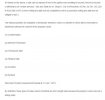
View attachment 53476
These are examples of it but they aren't the only situations where undue stimulus could apply. Desperation on buyers' parts can result in undue stimulus.

Also interesting is the part you cite where the examples are considered to be non-arms length. I've always said this but a contingent of AF members have been unable to grasp this concept for years. Some believe that non-AL has to be between related parties.
 
On sale appraisals, I look at the initial offer price. Then I look at the final counteroffer.
This range is a good indication of where my appraised value will fall.
The difference indicates whether buyer or seller have the advantage.
 
These are examples of it but they aren't the only situations where undue stimulus could apply. Desperation on buyers' parts can result in undue stimulus.

Citation needed. I've shown you one, now it's your turn to show me one.

The argument is that the entire market conditions itself is forcing buyers to buy.

We don't use this interpretation when all the sellers are desperate to sell in a declining market. In those conditions "not wanting to book a greater loss" for a seller is the equivalent of "not wanting to pay extra" for a buyer in a seller's market. Neither of which will result in a transaction which will be atypical for that market segment at that time. In both cases all of the buyers and all of the sellers are facing the same market conditions.
 
Last edited:
"Undue" is when a court orders a sale, or when a seller is otherwise compelled to sell (like in a divorce) or where there isn't an arm's length transaction, or when the buyer isn't putting together an assemblage and is more motivated than most to acquire at any price.

The prevailing market conditions for all such properties is not "undue" to any of them. Period.
Compelled to sell is a liquidation market value or distress market value...the term "undue stimulus" is not present in LV or DV definitions for that reason....
 
Status
Not open for further replies.
Find a Real Estate Appraiser - Enter Zip Code

Copyright © 2000-, AppraisersForum.com, All Rights Reserved
AppraisersForum.com is proudly hosted by the folks at
AppraiserSites.com
Back
Top