
The Premier Online Community for Real Estate Appraisers!
-
Welcome to AppraisersForum.com, the premier online
 community for the discussion of real estate appraisal. Register a free account to be able to post and unlock additional forums and features.

You are using an out of date browser. It may not display this or other websites correctly.
You should upgrade or use an alternative browser.
You should upgrade or use an alternative browser.
The Appraiser Shortage Myth Part 43
- Thread starter Michigan CG
- Start date
- Status
- Not open for further replies.

D
Deleted member 130081
Guest
The seemingly illogicality, which I think some are getting hung-up on is this (and I think you hit on it):
A. There is a presumption (two of them); the presumption is , that if you follow the list under #1 or #2, you are presumed to be paying C&R.
B. However, notwithstanding the list, a lender or its agent can be challenged for reasons not related to the list.
C. Once challenged, if the lender or its agent and show that it did follow all the items under #1 or #2, then they are presumed to be in compliance.
D. If they fail to follow all the requirements in #1 and #2, then they lose any presumption of compliance and get evaluated on condition-specific basis.
I see an illogicality between A & B: Why have the set of requirements to meet the presumption of compliance if they can be followed and yet get challenged for reasons other than those requirements?
One reason that made some sense to me was: If a lender happens to be paying the VA fee (but doesn't cite it as a presumption-compliance; it just happens by coincidence), gets challenged for not following Presumption #1, turns out they didn't follow all of the requirements under presumption #1, but in the end, since they are paying a VA fee it is C&R, then according to "D" (in my above outline) they'd be OK.
That seems a little torturous to me, but I can understand why that may be in a regulatory framework.
I read it that way too, with one questionable part. If challenged for reasons other than what is listed, and the lender has followed the conditions and is presumed complaint, would the case still be determined on the case-by-case basis? The variable being in one case the challenger has alternate evidence and in another they don't. So if they DO NOT have alternate evidence and still file a compliant, a lender may or may not be presumed complaint (depending if they followed the rules or not) and if they are presumed compliant, the case would go nowhere. However if THEY DO have alternate evidence and the lender is still presumed to be compliant, the case is then considered.?.? That's what I make of the law using the term presumption of compliance instead of path of compliance and all the other ways the law is structured pertaining to this part.
The only difference I see between what you got out of it and what I got out of it is that you appear to think if the lender is presumed compliant for any reason, the thing is dead and can not be challenged further (did I read that right from you?). I am leaning towards if the lender is presumed compliant, it is only a presumption and can still be challenged, (LOL) so long as the reasons are for something else than what is covered.

I dunno. I think the fact that all these years later it seems no one has been able to challenge, says a lot about the law and who it really serves. I know of zero individual cases. I know the state of LA has stepped in and that is yet to be settled. If the lawmakers truly had the intent of making sure appraisers were compensated fairly for the level of service and professionalism they bring to the table, it could have been written better.

- Joined
- Apr 4, 2007
- Professional Status
- Certified Residential Appraiser
- State
- Tennessee
With the in depth examination that you have now done, I suggest reading the transcript from the AL hearing an examining the evidence that the Board presented in reaching its conclusions. If you do that, I think you will see the big area of concern that many have with the LA case, and it has nothing to do with actually paying C&RI read it that way too, with one questionable part. If challenged for reasons other than what is listed, and the lender has followed the conditions and is presumed complaint, would the case still be determined on the case-by-case basis? The variable being in one case the challenger has alternate evidence and in another they don't. So if they DO NOT have alternate evidence and still file a compliant, a lender may or may not be presumed complaint (depending if they followed the rules or not) and if they are presumed compliant, the case would go nowhere. However if THEY DO have alternate evidence and the lender is still presumed to be compliant, the case is then considered.?.? That's what I make of the law using the term presumption of compliance instead of path of compliance and all the other ways the law is structured pertaining to this part.
The only difference I see between what you got out of it and what I got out of it is that you appear to think if the lender is presumed compliant for any reason, the thing is dead and can not be challenged further (did I read that right from you?). I am leaning towards if the lender is presumed compliant, it is only a presumption and can still be challenged, (LOL) so long as the reasons are for something else than what is covered.
I dunno. I think the fact that all these years later it seems no one has been able to challenge, says a lot about the law and who it really serves. I know of zero individual cases. I know the state of LA has stepped in and that is yet to be settled. If the lawmakers truly had the intent of making sure appraisers were compensated fairly for the level of service and professionalism they bring to the table, it could have been written better.

hastalavista
Elite Member
- Joined
- May 16, 2005
- Professional Status
- Certified General Appraiser
- State
- California
The only difference I see between what you got out of it and what I got out of it is that you appear to think if the lender is presumed compliant for any reason, the thing is dead and can not be challenged further (did I read that right from you?). I am leaning towards if the lender is presumed compliant, it is only a presumption and can still be challenged, (LOL) so long as the reasons are for something else than what is covered.
You interpretation of my interpretation

 ) is mostly correct.
There is one proviso in the IFR which would invalidate the presumption of C&R if all the other conditions of Presumption #1 were followed (my bold for emphasis):
The first presumption of compliance described above (226.42(f)(2)) reflects the Board's interpretation of the statutory requirement that fees paid to fee appraisers be "customary": to be "customary", the fee must be reasonably related to recent rates for appraisal services in the relevant geographic market. This first presumption of compliance also reflects the Board's interpretation of the statutory requirement that the fee be "reasonable": to be "reasonable,", the fee should be adjusted as necessary to account for factors in addition to the geographic market that affect the level of compensation appropriate in a given transaction, such as the type of property and the scope of work. The Board recognizes, however, that if some creditors or AMCs dominate the market through illegal anticompetitive acts, "recent rates" may be an inaccurate measure of hat a "reasonable fee should be. Thus, to qualify for the presumption of compliance, a creditor and its agents also must not commit anticompetitive acts in violation of the state or federal law that affects compensation of fee appraisers.
So, IMO, if the creditor follows all of the requirements of Presumption #1, they are presumed to be in compliance.
If someone challenges that and the creditor, indeed, has followed all the requirements of Presumption #1, they will be found to be in compliance.
However, if it can be proved that the creditor has engaged in illegal* anticompetitive acts, then regardless of the fact that they have followed all the other conditions, those fees paid due to an illegal anticompetitive act would not meet the presumption, and could be challenged.
*Now, I've bolded "illegal" because many believe that AMCs are anticompetitive due to their size; that isn't a sufficient charge to meet the "illegal" definition (at least, so far). The IFR goes on to give examples (which, you probably read already) of scenarios where a lender or AMC dominates a market such that no other can enter into it. Obviously, a secret handshake on "agreed fees" between lenders/AMCs would also be illegal and anticompetitive.
But I am not aware of any lender or AMC that dominates any particular market to the exclusion of others. So, the anticompetitive charge is a high hurdle to cross to get to the "illegal" threshold (Eli holds out hope that the FTC will determine AMC fee structure is anticompetitive; I'll take the counter-bet on that).
And, it is apparent that most AMCs, when sending out requests, either (a) ask for the bid and turn-time or (b) if there is a stated fee, allow for a counter-bid. Unless they are following Presumption #2, and use, say, the VA fee schedule. Such practice is designed to avoid a charge of illegal anticompetitive acts.
Presumption #1 has a number of conditions that must be met to be in compliance. If a creditor (or its agent, the AMC) follow those steps, then they are presumed to be in compliance. One can attempt to challenge that presumption for any reason unrelated to those conditions. But, the IFR refers back to those conditions and if they are followed, the creditor will be in compliance. The exception is if the conditions of Presumption #1 are met while practicing illegal anticompetitive behavior; in that case, because the creditor's so-called C&R is developed in an illegal anticompetitive environment, none of those conditions can be presumed to be conditions of compliance, and the challenge is then evaluated on the specifics of the situation.
To me, it is rather straightforward (as straightforward as regulatory language and rules can be
).The IFR goes on to provide the reasons why there are more than one presumption of compliance for C&R. Indeed, it quotes FHA in footnote #36:
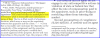
And then says (on the same page-my bold for emphasis):
Similarly, TILA Section 129E(i) focuses on the marketplace by permitting use of objective market information to determine rates. The statue also makes allowances for factors that the marketplace acknowledges add to the complexity of an appraisal and thus value of appraisal services in a given transaction, such as "increased time, difficulty, and scope of work." TILA Section 129E(i)(1) and (3).
Accordingly, the interim final rule and alternative presumptions of compliance are designed to be consistent with this approach. The interim final rule is not intended to prohibit a creditor and an appraiser from negotiating a rate for an assignment in good faith, nor is it intended to prohibit a creditor from communicating to a fee appraiser the rates that had been submitted by the other appraisers solicited for the assignment as part of this negotiation. In addition, the interim final rule is not intended to prevent appraisers and creditors from negotiating volume-based discounts for a creditor that provides multiple appraisal assignments to a fee appraiser. See Comment 42(f)(1)-5.
Accordingly, the interim final rule and alternative presumptions of compliance are designed to be consistent with this approach. The interim final rule is not intended to prohibit a creditor and an appraiser from negotiating a rate for an assignment in good faith, nor is it intended to prohibit a creditor from communicating to a fee appraiser the rates that had been submitted by the other appraisers solicited for the assignment as part of this negotiation. In addition, the interim final rule is not intended to prevent appraisers and creditors from negotiating volume-based discounts for a creditor that provides multiple appraisal assignments to a fee appraiser. See Comment 42(f)(1)-5.
That is why there are two presumptions. One is market-based via the transactions of the creditor/agent and appraiser (Presumption #1) and the other is objective market survey/study which was specifically cited in Dodd-Frank. BTW, one can challenge the second presumption in the same manner one can challenge the first presumption. So, I read that to mean that just because a survey is done by some non-AMC organization that doesn't include AMC fees as part of its data, the fees indicated in such a study can still be challenged as non-C&R (I'd say the same goes if someone wanted to challenge the VA fee).
And, it should be obvious that an appraiser can agree to volume-based discounts; such activity would be a market-based reaction and not, by itself, disqualify the agreement from compliance.
The IFR was never intended to substitute a "set fee" for what it describes as "the marketplace" to determine C&R. It was specifically designed to allow the marketplace to set the C&R fee. Presumption #2 simply uses a different dataset for compliance than Presumption #1. Both can be challenged. And, illegal anticompetitive behavior throws it all out the window.

Meandering
Elite Member
- Joined
- Feb 26, 2006
- Professional Status
- Real Estate Agent or Broker
- State
- Pennsylvania
yep, like i thought., you posted something with nothing more than your opinion, an alternate view was posted, you get defensive and deflect. sop.
I think you make stuff up.
Do you feed those crickets to your unicorns?
.


TRESinc
Elite Member
- Joined
- Dec 1, 2011
- Professional Status
- Licensed Appraiser
- State
- Ohio
I think you make stuff up.
that's rich coming from you.
Meandering
Elite Member
- Joined
- Feb 26, 2006
- Professional Status
- Real Estate Agent or Broker
- State
- Pennsylvania
D. If they fail to follow all the requirements in #1 and #2, then they lose any presumption of compliance and get evaluated on condition-specific basis.
No such thing.
There is no "requirement" for any AMC, or lender to "follow" a presumption. AMCs and Lenders can present evidence in support of one or both presumptions, but there is nothing that says presumptions are a compliance requisite.
One reason that made some sense to me was: If a lender happens to be paying the VA fee (but doesn't cite it as a presumption-compliance; it just happens by coincidence), gets challenged for not following Presumption #1, turns out they didn't follow all of the requirements under presumption #1, but in the end, since they are paying a VA fee it is C&R, then according to "D" (in my above outline) they'd be OK.
Again, there is no requirement to follow a presumption, hence presumptions are not challenged. What is challenged is if the fee paid represents a C&R, and if the fee happens to be the same as the VA fee, then that is some evidence towards the "reasonable" test, then the fee must be tested for "customary", none of which has anything to do with a presumption.
Please wipe out the years of kool aid, and read the whole thing before opining.
.
Meandering
Elite Member
- Joined
- Feb 26, 2006
- Professional Status
- Real Estate Agent or Broker
- State
- Pennsylvania
that's rich coming from you.
'try again, post the # where I said Wells Fargo is an AMC.
Going to rain in Georgia.
.
- Status
- Not open for further replies.