• Welcome to AppraisersForum.com, the premier online  community for the discussion of real estate appraisal. Register a free account to be able to post and unlock additional forums and features.

Three days in a row. Different GLA than advertised.

It's like she inserts a "therefore you really mean this" instead of accepting what is actually said.

The original question: AB, I usually consider the width of the adjusted value range as a critical factor, i.e., the more narrow it is, the more obvious that the price point is. Question: is there a mathmatical expression to describe the width other than in absolute dollars, e.g., from $xxxx.o to $zzz.o, or $.....00? Can the width be described in relative terms, perhaps a ratio of some sort, or a variance percentage?

My answer: Coefficient of Variance, which is a statistical measure of dispersion applicable to any range.

I have know idea how she got from point A to the alternate universe she is currently arguing in.
 
The majority of appraisers provide a supportable explanation of why they chose to reocnicle at X $ point value and usually address the specific comps receiving most weight or consideraion, as well as referencing market conditions and other factors.
It is my observation that posts here often reflect an assumption that most other appraisers work the same way as the person writing the post. :)

UAD 3.6 requires an indication of how the comps were weighted. Why would you think that change was made?
 
Coefficient of Variance
The coefficient of variation (CV) is a statistical measure of relative dispersion, calculated by dividing the standard deviation by the mean and multiplying by 100 to express it as a percentage. It is useful for comparing the variability of different datasets, especially when they have different units or vastly different means, as it provides a standardized, unitless measure of dispersion. A lower CV indicates less variability relative to the mean, suggesting more consistency.
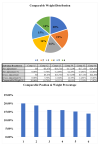
View attachment 104582

Median or Mean Absolute Deviation is also a good way to analyze a sample. Distance from median/average of each sale price. Useful to help define neighborhoods, market areas or just outliers within a sample.

CV is a relative measure of variability. It has more meaning with symmetric normal type distributions. For real estate, it really doesn't have that much practical use. Our data is imperfect, very chunky. Sale price values are scattered here and there, more densely packed in some areas and less in others. Our regression will catch the values regardless of the variability. We have linear substrates, we have exponential substrates, we have flat substrates. These parametric statistics you are recommending - are not that helpful. Actually.

We are in the field of NON-PARAMETRIC (ranking) statistics, DATA MINING, where MARS regression excels.
 
It is my observation that posts here often reflect an assumption that most other appraisers work the same way as the person writing the post. :)

UAD 3.6 requires an indication of how the comps were weighted. Why would you think that change was made?
When I'm using the weighted average for my value indication will this suffice or will I need to show the worksheet formulas I used to create it? Will telling the reader to refer to this exhibit disrupt the workflow of the new form because it requires the reader to jump to an addendum or is there a drop down dialog box in the new form to insert supporting documentation such as this in the correct spot of the form? Just curious, haven't played with 3.6 yet.

1762366203016.png
 
It is my observation that posts here often reflect an assumption that most other appraisers work the same way as the person writing the post. :)

UAD 3.6 requires an indication of how the comps were weighted. Why would you think that change was made?
Peer practice is a USPAP standard, correct? We do not have to work the same way but we should come to major conclusions and development along a similar standard met path.

Would you say that it is common for appraisers to think that one number within the adjusted range is as valid as the next? Where does that lead to- if one reads their posts?
I imagine the UAD 3.6 requires an indication of how the comps are weighted to prevent a default or rote average and force some kind of explanation wrt choice/ranking?

I personally believe that using a math % is not much better than a rote default to an average, if that was the purpose, but it is some kind of choice , ranking is better but one might say it accomplishes the same thing. Property prices and adjusted values reflect the contributory aspects negative and positive of the comps compared to the subject and that is better explained imo by narrative rather than a math %.
 
CV is a relative measure of variability. It has more meaning with symmetric normal type distributions. For real estate, it really doesn't have that much practical use. Our data is imperfect, very chunky. Sale price values are scattered here and there, more densely packed in some areas and less in others. Our regression will catch the values regardless of the variability. We have linear substrates, we have exponential substrates, we have flat substrates. These parametric statistics you are recommending - are not that helpful. Actually.

We are in the field of NON-PARAMETRIC (ranking) statistics, DATA MINING, where MARS regression excels.
Done properly, the simple statistical tools can still produce valid results. I agree you probly have a better mousetrap.

EDIT: cause you'll probly go deep into why I'm wrong...and I won't disagree with that either but methodologies commonly used are considered appropriate for their intended use. The rest of the industry has just not caught up to you yet.
 
Done properly, the simple statistical tools can still produce valid results. I agree you probly have a better mousetrap.

EDIT: cause you'll probly go deep into why I'm wrong...and I won't disagree with that either but methodologies commonly used are considered appropriate for their intended use. The rest of the industry has just not caught up to you yet.

In some cases. At least you have a good attitude.
 
Peer practice is a USPAP standard, correct? We do not have to work the same way but we should come to major conclusions and development along a similar standard met path.

Would you say that it is common for appraisers to think that one number within the adjusted range is as valid as the next? Where does that lead to- if one reads their posts?
I imagine the UAD 3.6 requires an indication of how the comps are weighted to prevent a default or rote average and force some kind of explanation wrt choice/ranking?

I personally believe that using a math % is not much better than a rote default to an average, if that was the purpose, but it is some kind of choice , ranking is better but one might say it accomplishes the same thing. Property prices and adjusted values reflect the contributory aspects negative and positive of the comps compared to the subject and that is better explained imo by narrative rather than a math %.
What I would say is that you 100% missed the point of my post. Failure to include actual reconciliation is a commonly cited appraisal report deficiency.
 
UAD 3.6 requires an indication of how the comps were weighted. Why would you think that change was made?
Is that requirement similar to that included in USPAP for years, or does it require appraisers to fabricate a specific percentage weight for each comp, as some already do (sans any explanation of where those weights sprung from).
 
When I'm using the weighted average for my value indication will this suffice or will I need to show the worksheet formulas I used to create it? Will telling the reader to refer to this exhibit disrupt the workflow of the new form because it requires the reader to jump to an addendum or is there a drop down dialog box in the new form to insert supporting documentation such as this in the correct spot of the form? Just curious, haven't played with 3.6 yet.

View attachment 104586
Is the formula the same as that relied on by Total from Alamode?
 
Find a Real Estate Appraiser - Enter Zip Code

Copyright © 2000-, AppraisersForum.com, All Rights Reserved
AppraisersForum.com is proudly hosted by the folks at
AppraiserSites.com
Back
Top