• Welcome to AppraisersForum.com, the premier online  community for the discussion of real estate appraisal. Register a free account to be able to post and unlock additional forums and features.

Three days in a row. Different GLA than advertised.

What I would say is that you 100% missed the point of my post. Failure to include actual reconciliation is a commonly cited appraisal report deficiency.
Why didn't you just say that then?

Failure to include a reconciliation statement is a deficiency that seems to indicate that it is good peer practice to provide such a statement. I can't imagine not doing that.

It seems now the UAD 3.6 wants specific comp mathematical weighting as part of the reconciliation statement, correct?

Back to my question, do you or do you not endorse the concept that any number along the adjusted range is as valid as another number?
 
UAD 3.6 requires an indication of how the comps were weighted.
Most consideration was accorded to Comparables #1 and #2 due to their lowest net and gross adjustments.
 
Is the formula the same as that relied on by Total from Alamode?
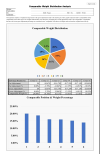
Yes, I simply expanded that formula into a custom worksheet that I made which will automatically graph comparability from data pulled off of the grid. And since you asked about "where the data came from" here is how that graph looks in an actual report which explains the analysis. I just quickly threw it in from a report that I'm working on, and I redacted some information. It looks better in a completed form.
1762368541163.png
 
Most consideration was accorded to Comparables #1 and #2 due to their lowest net and gross adjustments.
With current form, I don't look initially at the net and gross adjustments when I reconcile.
When I need reasons or excuses to justify how I weigh the comps, I look at the net and gross adjustments as validation.
I assume my peers do that too.
 
Yes, I simply expanded that formula into a custom worksheet that I made which will automatically graph comparability from data pulled off of the grid. And since you asked about "where the data came from" here is how that graph looks in an actual report which explains the analysis. I just quickly threw it in from a report that I'm working on, and I redacted some information. It looks better in a completed form.
View attachment 104588
I have never been a fan of this approach, but it may become necessary if the "users" of appraisal reports become any less competent. Mind you, I don't think it is "wrong" in any way, but I prefer a very brief narrative and to date, have only had one or two questions insisting that I provide a specific numerical weight to each comp. However, I can foresee the inevitable creep from guideline to critical element that so commonly occurs. At that point, this is likely the best approach as there is no requirement that "they" agree with it, only that they understand the process followed.
 
I have never been a fan of this approach, but it may become necessary if the "users" of appraisal reports become any less competent. Mind you, I don't think it is "wrong" in any way, but I prefer a very brief narrative and to date, have only had one or two questions insisting that I provide a specific numerical weight to each comp. However, I can foresee the inevitable creep from guideline to critical element that so commonly occurs. At that point, this is likely the best approach as there is no requirement that "they" agree with it, only that they understand the process followed.
I do lots of relocation work, and feedback from the clients and their review appraisers have indicated over the years that they are "fans" of that approach. One relo review appraiser told me a couple years ago that mine were the best supported reports that he'd ever seen. When the transferees compare one of my reports with charts and graphs detailing market conditions and comparable weight distribution analysis against other appraisers reports lacking the same, it just "appears" more credible. "Unearned credibility" for sure, but credibility nonetheless.
 
It seems now the UAD 3.6 wants specific comp mathematical weighting as part of the reconciliation statement, correct?
No, that is not correct.
 
UAD 3.6 requires an indication of how the comps were weighted.
In your prior post, you indicated the above-weighted indicates a mathematical weighting rather than a ranking or consideration as used in narrative.
 
In your prior post, you indicated the above-weighted indicates a mathematical weighting rather than a ranking or consideration as used in narrative.

I actually took great care to say no such thing.

UAD 3.6 requires an indication of how the comps were weighted...
Where do you see "mathematical" in that?

You can look up the actual requirements in the UAD 3.6 spec if you wish.
The change was made primarily to aid those who currently provide no reconciliation. It is a built-in "USPAP Assist," if you will. :)
Changes were made to HBU for the same reason.
 
Is that requirement similar to that included in USPAP for years, or does it require appraisers to fabricate a specific percentage weight for each comp, as some already do (sans any explanation of where those weights sprung from).

It is part of the Flying-By-The-Seat-Of-The-Pants Protocol: Give more weight to the higher priced comps, all other things being near equal. As far more weight as possible, as far as you can get away with. An optimistic mind-set helps.
 
Last edited:
Find a Real Estate Appraiser - Enter Zip Code

Copyright © 2000-, AppraisersForum.com, All Rights Reserved
AppraisersForum.com is proudly hosted by the folks at
AppraiserSites.com
Back
Top